

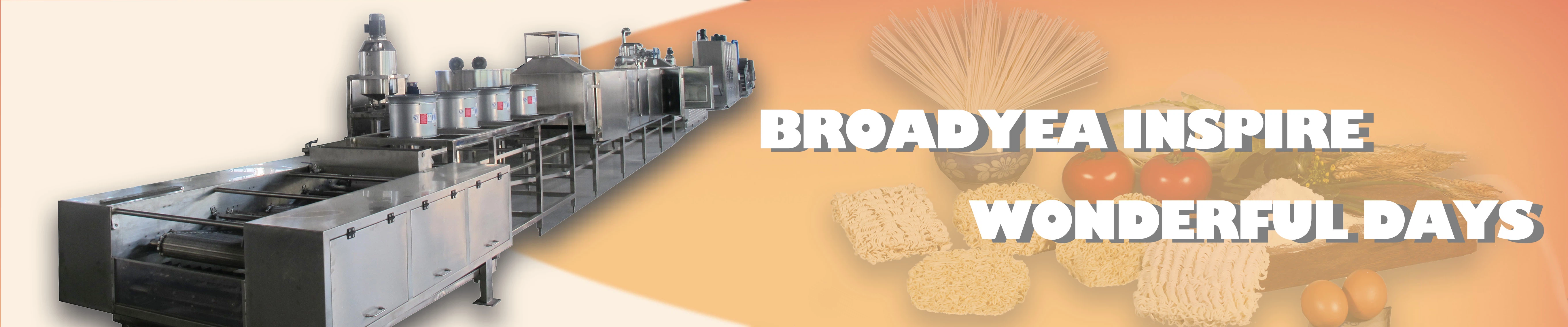
Fresh Noodle Production Line
Before cutting, the process equipment is the same as the frying noodle production line. With the characteristics of special technology, novel structure, reasonable design, stable operation, safety, convenient maintenance and so on. Per shift is 4 to 12 tons. Roller width is 300 to 800 mm. The size can customized by customer.
Here are some of the key benefits and features of these production lines:
Efficiency: Fresh noodle production lines are designed to streamline the noodle production process. With the use of advanced technology, these lines can produce large quantities of high-quality noodles in a shorter amount of time, which translates to increased production efficiency.
Consistency: Consistency is critical when producing fresh noodles. The use of a production line ensures that each batch of noodles is consistent in texture, shape, and size. This level of consistency helps to establish a brand's reputation for quality and reliability.
Customization: Most fresh noodle production lines are customizable to meet the specific production needs of a business. Whether it's changing the noodle size, texture, or shape, these production lines can be adjusted to create a unique product that meets the demands of clients and consumers.
Ease of use: Fresh noodle production lines are designed for ease of use. Experienced and novice operators can handle the equipment with minimal training, enabling businesses to hire staff with minimal training time and reduce downtime caused by machinery malfunctions.
Minimal waste: Fresh noodle production lines generate minimal waste due to their precision manufacturing processes. With very little material wasted, businesses can increase profit margins and reduce their environmental footprint.
Better quality control: With fresh noodle production lines, businesses can exercise better control over the quality of their final product. The machinery, materials, and processes are all carefully monitored, and any issues can be addressed quickly to maintain a high standard of quality.
In conclusion, fresh noodle production lines offer significant advantages for businesses in the food industry. From efficiency and consistency to customized production, ease of use, minimal waste, and better quality control, these production lines are a valuable asset in today's competitive marketplace.
Fresh noodle production line is a mechanized system designed for the efficient and standardized manufacturing of fresh noodles. This production line typically consists of several interconnected machines and equipment, each performing specific tasks in the noodle-making process. The production line begins with the mixing and kneading of flour and water to form the noodle dough. The fresh noodle production line often includes components for steaming or boiling the noodles to achieve the desired texture. Cooling and drying stages follow, ensuring that the noodles are properly set and ready for packaging. Additionally, these production lines may incorporate quality control mechanisms to monitor and maintain the standard characteristics of the noodles, such as size, thickness, and texture.
Advantages of Fresh Noodle Production Line
Enhanced efficiency and productivity
Fresh Noodle Production Line is designed for high efficiency and increased productivity in noodle manufacturing. The automated processes streamline production, reducing manual labor and allowing for larger output volumes.
Consistent quality control
The production line ensures consistent quality control throughout the noodle-making process. Automated systems monitor key parameters, such as ingredient proportions, mixing, and cutting, leading to uniform and superior-quality noodles.
Versatility in noodle types
Fresh Noodle Production Lines offer versatility, accommodating various noodle types and styles. Whether it's ramen, udon, soba, or other specialty noodles, the production line can be configured to meet diverse market demands.
Hygienic
The production line is constructed using materials that meet strict hygiene standards. Stainless steel, often used in critical components, ensures easy cleaning and maintenance, reducing the risk of contamination and ensuring the production of safe and sanitary noodles.
-
![Automatic Fresh Noodle Machines Flour Conveying Equipment]() Automatic Fresh Noodle Machines Flour Conveying EquipmentFlour air transport equipment *By using the machine of Roots blower to form a difference pressure, which conveyor the flour into the temporary storage tank for backup. *Composed by Roots blower,...read more
Automatic Fresh Noodle Machines Flour Conveying EquipmentFlour air transport equipment *By using the machine of Roots blower to form a difference pressure, which conveyor the flour into the temporary storage tank for backup. *Composed by Roots blower,...read more -
![Fresh Noodle Equipment Alkali Liquid System]() Fresh Noodle Equipment Alkali Liquid SystemThe system of Alkali liquid *Alkali liquid mixer used the body of octagon, the top of conical cylinder, which makes the whole machine beautiful, useful, enhance the intensity. *Alkali liquid...read more
Fresh Noodle Equipment Alkali Liquid SystemThe system of Alkali liquid *Alkali liquid mixer used the body of octagon, the top of conical cylinder, which makes the whole machine beautiful, useful, enhance the intensity. *Alkali liquid...read more -
![Fresh Noodles Making Flour Mixer]() Fresh Noodles Making Flour MixerFlour mixer *Flour machine is a horizontal with double shaft. The inner-tank are made of stainless steel304 material and the blended wing adopts integral precision casting and surface polishing....read more
Fresh Noodles Making Flour MixerFlour mixer *Flour machine is a horizontal with double shaft. The inner-tank are made of stainless steel304 material and the blended wing adopts integral precision casting and surface polishing....read more -
![Fresh Noodles Maker Aging Machine]() Fresh Noodles Maker Aging MachineFlour conveyor Ripening is commonly called waking the flour, which improves the processing properties of dough by means of time lapse. *To permeate water into the interior of protein colloid...read more
Fresh Noodles Maker Aging MachineFlour conveyor Ripening is commonly called waking the flour, which improves the processing properties of dough by means of time lapse. *To permeate water into the interior of protein colloid...read more -
![Fresh Noodle Processing Line Compound Rolling Machine]() Fresh Noodle Processing Line Compound Rolling MachineCompound rolling machine *Adopt two group of feeder and one group of compound rolling. The group of feeder adopts the drawing roller, which can effectively reduce the damage of noodle belt and...read more
Fresh Noodle Processing Line Compound Rolling MachineCompound rolling machine *Adopt two group of feeder and one group of compound rolling. The group of feeder adopts the drawing roller, which can effectively reduce the damage of noodle belt and...read more -
![Fresh Noodle Machine Continuous Rolling Machine]() Fresh Noodle Machine Continuous Rolling MachineContinuous rolling machine *The placement of slitter in 10 degrees, can make the noodle of silk is even and tidy and reduce the weight difference in unit volume. *The material of roller and gear,...read more
Fresh Noodle Machine Continuous Rolling MachineContinuous rolling machine *The placement of slitter in 10 degrees, can make the noodle of silk is even and tidy and reduce the weight difference in unit volume. *The material of roller and gear,...read more


Why Choose Us
Professional team
Broadyea® who is specialized in Noodles Machinery Manufacture by R&D,production,sales,after-sales service,
Rich Experience
We have a great experienced design engineers and manufacture technicians with more than thirty years experience, which forms a rounded management system of rules and process.
Global Shipping
And our productions are exported to USA, Brazil, Roumania, Southeast of Asia and many other countries.
Custom Service
Our company are not only to provide the equipment to our customers, but also furnish customers with relevant the process of production and technical assistance, as well as the equipment of installation, setting-up, personnel training, after-sales service etc.
Types of Fresh Noodle Production Line
Continuous fresh noodle production line
Continuous production lines are characterized by a seamless and uninterrupted workflow. These lines are designed for high-volume production, ensuring a constant output of fresh noodles with minimal downtime between batches.
Small-scale fresh noodle production line
Some production lines are designed for smaller-scale operations, suitable for small or artisanal noodle manufacturers. These lines may offer flexibility in terms of noodle types and production volumes, catering to businesses with lower output requirements.
Egg noodle production line
Egg noodles, enriched with eggs for flavor and texture, have their own specialized production lines. These lines incorporate machinery for mixing, extruding or rolling, cutting, and drying egg noodles, ensuring the incorporation of eggs into the dough.
Automatic chinese noodle production line
Chinese noodles come in various shapes and sizes, and an Automatic Chinese Noodle Production Line is versatile enough to handle different types of Chinese noodles. This production line typically includes modules for dough preparation, shaping, steaming, and drying.
Soba noodle production line
Soba noodles, made from buckwheat flour, have distinct production needs. A Soba Noodle Production Line is equipped with machinery to handle the mixing, rolling, cutting, and drying of soba noodles, ensuring the preservation of their traditional characteristics.
Udon noodle production line
Udon noodles, a popular type of Japanese noodle, have their own specialized production lines. These lines typically include equipment for kneading, sheeting, cutting, and boiling udon noodles, meeting the unique requirements of this noodle variety.
Automatic ramen noodle production line
This type of production line is designed specifically for the efficient and automated manufacturing of ramen noodles. It includes machinery for dough mixing, rolling, shaping, steaming, and drying, ensuring the production of consistent and high-quality ramen noodles.
How to Choose Fresh Noodle Production Line
Flexibility and versatility
Assess the flexibility of the production line. If you plan to diversify your product range or adapt to changing market demands, choose a line that allows for easy adjustments to produce different noodle types or sizes.
Quality control features
Look for production lines with built-in quality control mechanisms. These features can include sensors and monitoring systems to ensure uniformity in noodle size, thickness, and texture. Consistent quality is crucial for consumer satisfaction.
Type of noodles
Identify the specific types of noodles you intend to produce. Different production lines are designed for various noodle varieties such as ramen, udon, soba, egg noodles, or Chinese noodles. Choose a production line that is tailored to the characteristics and requirements of the noodles you plan to manufacture.
Production capacity
Determine your production volume requirements. Production lines come in different capacities, ranging from small-scale artisanal lines to large-scale industrial lines. Ensure that the chosen line can meet your current and future production demands.
Automation level
Evaluate the level of automation needed for your production. Higher levels of automation can improve efficiency and consistency but may come with increased costs. Consider the balance between manual and automated processes based on your budget and production scale.
Material of Fresh Noodle Production Line


Stainless steel
Stainless steel is a prevalent material for many components of noodle production lines due to its corrosion resistance, durability, and ease of cleaning. Parts such as mixing tanks, dough conveyors, cutting blades, and drying racks are often made from stainless steel to meet hygiene standards and ensure longevity.
Food-grade plastics
Certain non-metallic components, especially those in direct contact with food materials, may be made from food-grade plastics. These materials are chosen for their safety, ease of cleaning, and compliance with food safety regulations.
Aluminum
Aluminum is used in some components of noodle production lines due to its lightweight nature. While not as common as stainless steel, aluminum is suitable for specific applications where weight is a consideration.
Carbon steel
Carbon steel may be used for structural components of the machinery. However, it is less common in parts that come into direct contact with food due to the risk of corrosion.
Ceramics and coated surfaces
Components that handle delicate processes, such as cutting or shaping, may have ceramic or coated surfaces. These materials prevent sticking and minimize friction, contributing to the precision and quality of the noodle production process.
Rubber and food-grade seals
Rubber and food-grade seals are used in various parts of the machinery to ensure proper sealing and prevent contamination. These materials are chosen for their flexibility, resistance to wear, and compatibility with food processing requirements.
Heat-resistant materials
Components involved in steaming or boiling processes may be made from heat-resistant materials to withstand elevated temperatures. This ensures the safe and efficient cooking of noodles during production.
Modular and plastic belts
Conveyor belts within the production line may be made from modular plastic materials. These belts are designed for durability, easy cleaning, and the ability to withstand the stresses of continuous operation.
Electrical components
Electrical components within the control systems and automation parts of the production line are typically made from materials that meet electrical safety standards. These may include plastics, metals, and insulating materials to ensure reliable and safe operation.
Working Principle of Fresh Noodle Production Line
Working principle of a Fresh Noodle Production Line involves a systematic and automated process that transforms basic raw ingredients into high-quality fresh noodles. The production line typically begins with the accurate mixing of flour and water to form a consistent dough, achieved through specialized mixing equipment. The dough is then conveyed to subsequent units for rolling and flattening, where it is shaped into a sheet of uniform thickness.
Following the cutting process, the noodles undergo cooking stages, which may include steaming or boiling, depending on the noodle type being produced. This step contributes to the desired texture and consistency of the noodles. After the cooking phase, the noodles move to a cooling and drying section, where they are set and prepared for packaging. Throughout the entire process, automation plays a key role, with conveyor systems, sensors, and control mechanisms ensuring the seamless flow of dough and noodles between different units.
Working principle is underpinned by precision and efficiency, with the production line designed to handle large volumes while maintaining consistency in noodle characteristics. Quality control measures are integrated, utilizing sensors and monitoring systems to ensure that the final product meets specified standards for size, thickness, and texture.
The Manufacturing Process of Fresh Noodle Production Line
Ingredient mixing
The process begins with the accurate mixing of flour and water to create a homogenous dough. This step is critical for achieving the desired texture and taste of the noodles. Specialized mixing equipment ensures precise proportions and consistent dough quality.
Kneading and dough formation
The mixed dough undergoes kneading, a crucial step for developing gluten and enhancing the noodle's texture. The kneaded dough is then shaped into a uniform sheet by rolling or extrusion, depending on the type of noodle being produced.
Sheeting and cutting
The dough sheet is further processed to achieve the desired thickness and shape. Cutting machines, equipped with sharp blades, precisely cut the dough sheet into uniform noodle strands. The cutting process ensures consistency in size and appearance.
Steaming or boiling
Depending on the noodle variety, the freshly cut strands may undergo steaming or boiling. This step cooks the noodles to the desired texture, with steaming providing a firmer texture while boiling yields a softer one. The cooking process is crucial for achieving the characteristic taste and mouthfeel of the noodles.
Cooling and drying
The cooked noodles move to a cooling stage, where they are set and prepared for drying. Cooling may involve exposure to air or water to control the noodle's temperature. Subsequently, the noodles pass through a drying phase, either through hot air drying or other methods, ensuring their preservation and shelf stability.
Quality control
Throughout the entire process, quality control measures are implemented. Sensors and monitoring systems assess factors such as size, thickness, and texture to ensure that the noodles meet predetermined standards. Any variations or defects are identified and corrected to maintain consistent quality.
Packaging
The final step involves packaging the dried and cooled noodles. Packaging can be done in various formats, including bags, boxes, or vacuum-sealed packages. The packaging process is designed to preserve the freshness and quality of the noodles during storage and transportation.
Automation and control systems
Automation plays a crucial role in the entire manufacturing process. Conveyor systems transport the dough and noodles between different units seamlessly. Control systems ensure the synchronization of various stages, optimizing efficiency and minimizing downtime.
Components of Fresh Noodle Production Line
Flour and water mixing system
This component involves equipment for accurately measuring and mixing flour and water to create a consistent dough. It may include mixing tanks, conveyors, and automated dosing systems.
Dough kneading and sheeting machines
After mixing, the dough undergoes kneading to develop gluten and improve texture. Kneading machines, often followed by sheeters or extruders, shape the dough into a uniform sheet of the desired thickness.
Cutting machines
Cutting machines are essential for shaping the dough sheet into individual noodle strands. These machines feature sharp blades that cut the dough into precise sizes and shapes, ensuring uniformity in the final product.
Steaming or boiling equipment
Depending on the noodle type, there may be equipment for steaming or boiling the noodles. This step cooks the noodles to achieve the desired texture and taste.
Cooling conveyor
After cooking, the noodles move through a cooling conveyor, which sets the noodles and prepares them for the subsequent drying process. The cooling phase may involve exposure to air or water.
Drying system
The drying system is crucial for removing moisture from the noodles, ensuring shelf stability and preventing spoilage. It may include hot air dryers, continuous belt dryers, or other drying methods depending on the production line design.
Quality control sensors and monitoring systems
Throughout the production line, sensors and monitoring systems are incorporated to assess various factors such as size, thickness, and texture. These components ensure that the noodles meet specified quality standards, and any deviations are identified for correction.
Packaging machinery
Once the noodles are dried and cooled, they move to packaging machinery. This component involves equipment for packaging the noodles into bags, boxes, or other containers. Vacuum-sealing systems may also be used for extended shelf life.
Conveyor systems
Conveyor systems are integral for the seamless transport of the dough and noodles between different units within the production line. They facilitate continuous and efficient workflow.
Control systems and automation
Control systems and automation technologies coordinate the entire production process. They ensure synchronization between different components, optimize efficiency, and allow for programmable settings to meet specific production requirements.
Cleaning and sanitization components
Hygiene is critical in food production, and Fresh Noodle Production Lines often include components for easy cleaning and sanitization. Smooth surfaces, removable parts, and access points for cleaning contribute to maintaining food safety standards.
How is the consistency of noodle dough maintained during the Fresh Noodle Production Line
Precise mixing parameters
The initial step involves the accurate measurement and mixing of flour and water. Using precise mixing parameters, such as the right ratio of ingredients and controlled mixing time, ensures a consistent dough texture from the start.
Automated mixing systems
Many production lines incorporate automated mixing systems that guarantee uniform distribution of ingredients. These systems can be programmed to maintain consistent mixing conditions, minimizing variations in dough quality.
Continuous monitoring and adjustments
Sensors and monitoring systems are employed to continuously assess the characteristics of the dough. If any deviations are detected, automated systems can make real-time adjustments to maintain the desired consistency. This level of control is especially critical in large-scale, continuous production.
Temperature and humidity control
Controlling the temperature and humidity of the production environment is essential. These factors impact the hydration and gluten development in the dough. Consistent environmental conditions contribute to uniform dough quality throughout the production process.
Dough resting periods
Some production lines incorporate resting periods for the dough at specific stages of the process. Allowing the dough to rest between mixing and further processing helps to relax the gluten and improve its elasticity, contributing to a more consistent texture.
Precision in sheeting and cutting
The sheeters and cutting machines in the production line are designed to operate with precision. This ensures that the dough is rolled and cut into uniform sheets and strands, maintaining consistency in size and shape.
Steam or boil parameters
If the noodle type requires steaming or boiling, maintaining consistent parameters such as temperature and duration during the cooking process is crucial. This ensures that all noodles are cooked to the same texture, contributing to overall consistency.
Quality control inspections
Integrated quality control measures involve inspections of the dough and noodles at various stages. Any deviations from the predetermined characteristics trigger corrective actions, preventing inconsistent products from progressing further in the production line.
Automation in drying process
The drying process is automated to ensure that all noodles receive consistent heat and airflow. Uniform drying prevents variations in texture and shelf stability. Advanced drying systems may include features such as adjustable temperature and humidity control.
How is the packaging process integrated into Fresh Noodle Production Line


Drying and cooling
Before the noodles reach the packaging stage, they usually undergo drying and cooling processes. These steps prepare the noodles for packaging by reducing moisture content and setting the texture. The noodles move from the drying section to the cooling conveyor, where they reach an optimal temperature for packaging.
Quality control check
Before packaging, the noodles undergo a final quality control check. Sensors and monitoring systems inspect the noodles for characteristics such as size, shape, and texture to ensure they meet the specified quality standards. Any noodles that deviate from these standards are identified and sorted out.
Weighing and portioning
The noodles are then directed to the weighing and portioning station. Automated systems measure and portion the noodles into predetermined quantities. This step ensures consistency in the amount of noodles in each package.
Packaging machine setup
Packaging machines are set up based on the packaging requirements for the specific noodle product. This includes configuring the machine to accommodate the selected packaging material, such as plastic bags, boxes, or vacuum-sealed packages.
Automatic bagging or sealing
In an automated process, the noodles are fed into the packaging machine, where they are automatically bagged or sealed. The packaging machine may form, fill, and seal bags or packages, ensuring that the noodles are securely contained and protected from external factors.
Quality inspection
Final quality inspection may occur after packaging to verify that the packaging process has been executed correctly. This ensures that the packaged noodles meet the quality and safety standards required for distribution and consumption.
Cartoning or case packing
For bulk packaging, the individual packages may be grouped and placed into larger cartons or cases. Automated cartoning systems or manual operators may be involved in this process, depending on the scale of production.
Palletizing and shrink wrapping
For larger-scale operations, the packaged cartons may be palletized for easier handling and transportation. Palletizing robots or manual palletization methods are used to arrange the cartons on pallets. The palletized goods are often shrink-wrapped to secure them for shipping.
Storage and distribution
The packaged and palletized noodles are then ready for storage or distribution. They can be stored in warehouses or shipped directly to retailers for sale. Proper storage conditions are maintained to preserve the quality and freshness of the noodles until they reach the end consumer.
Certainly, there are energy-efficient options available for Fresh Noodle Production Lines, reflecting a commitment to sustainability and cost-effectiveness in modern manufacturing. Advanced production line designs often incorporate energy-efficient technologies to reduce environmental impact and operational expenses. These options include the integration of energy-efficient motors, variable frequency drives, and smart automation systems that optimize power consumption based on production needs. Innovative drying technologies, such as infrared or microwave drying, are employed to minimize energy usage during the drying phase of noodle production. The use of heat recovery systems captures and repurposes heat generated during certain processes, contributing to overall energy efficiency. May also invest in energy management systems that monitor and control energy usage across the production line, identifying opportunities for optimization. By adopting these energy-efficient options, Fresh Noodle Production Lines not only contribute to environmental sustainability but also enhance operational efficiency, making them economically viable choices for responsible and forward-thinking food manufacturers.
Things to Note When Using Fresh Noodle Production Line
Ingredient quality and consistency
Ensure that the quality of raw ingredients, especially flour and water, remains consistent. Any variations in ingredient quality can impact the texture, taste, and overall quality of the fresh noodles. Regularly check and source high-quality ingredients from reliable suppliers.
Hygiene and sanitation
Maintain stringent hygiene practices throughout the production process. Regularly clean and sanitize all equipment and surfaces to prevent contamination. Implement proper personal hygiene measures among production staff to uphold food safety standards.
Equipment calibration and maintenance
Regularly calibrate and maintain all machinery and equipment in the production line. Guidelines for maintenance schedules, lubrication, and replacement of worn parts. Properly functioning equipment ensures consistent product quality and minimizes the risk of breakdowns.
Temperature and humidity control
Control and monitor temperature and humidity levels in the production environment, especially during dough preparation, sheeting, and drying stages. Consistent environmental conditions are crucial for achieving uniform noodle texture and quality.
Quality control and monitoring
Implement robust quality control measures at various stages of the production line. Utilize sensors and monitoring systems to check factors such as size, thickness, and texture of the noodles. Regularly inspect the final product to ensure it meets specified quality standards.
How to Maintain Fresh Noodle Production Line
Regular cleaning and sanitization
Implement a routine cleaning schedule for all components of the production line, including mixing equipment, conveyors, cutting machines, and packaging machinery. Use food-grade cleaning agents to ensure thorough sanitization and prevent contamination.
Daily inspections
Conduct daily inspections of the entire production line. Check for any signs of wear, damage, or malfunction in machinery and conveyor systems. Address issues promptly to prevent production disruptions and maintain the longevity of equipment.
Lubrication of moving parts
Regularly lubricate moving parts such as belts, chains, and gears to reduce friction and prevent wear. Follow the recommendations for lubrication intervals and use food-grade lubricants suitable for the equipment.
Tightening loose fasteners
Periodically check and tighten loose bolts, nuts, and fasteners. Vibrations during production can cause components to loosen over time. Keeping the equipment properly fastened ensures stability and prevents potential hazards.
Calibration of sensors and monitoring systems
Calibrate sensors and monitoring systems regularly to ensure accurate readings during the production process. Proper calibration is crucial for maintaining quality control and preventing deviations in noodle characteristics.
Alignment of machines
Check the alignment of machines, rollers, and cutting blades to ensure they are properly aligned. Misalignment can result in uneven cutting or shaping of the noodles, affecting the final product's consistency.
Replacement of worn parts
Identify and replace worn-out or damaged parts promptly. This may include blades, belts, seals, and any components subject to wear and tear. Regularly inspect and replace parts to avoid production disruptions and maintain product quality.
Monitoring temperature and humidity
Maintain optimal temperature and humidity levels within the production environment. This is particularly important during dough preparation, sheeting, and drying stages. Consistent environmental conditions contribute to the uniform quality of the noodles.
Certifications

Our Factory
Broadyea Machinery is a company specializing in the noodle production line. It has become an important supplier of instant noodles machine industry at home and abroad, and has a wide sales network in domestic and foreign markets. Our company's instant noodle production equipment is not only excellent in quality, leading technology, but also provide turnkey solution for the whole project, so it is welcomed by various manufacturers.Our company's sales network is very extensive, and our products are sold all over the world.

FAQ
Q: What is the primary function of a Fresh Noodle Production Line?
Q: How does a Fresh Noodle Production Line work?
Q: What types of noodles can be produced using a Fresh Noodle Production Line?
Q: How does the production line ensure the freshness of the noodles?
Q: Can the production line accommodate gluten-free or specialty noodles?
Q: What are the key components of a Fresh Noodle Production Line?
Q: How is the consistency of noodle dough maintained during the production process?
Q: What safety features are integrated into Fresh Noodle Production Lines?
Q: Is there a recommended maintenance schedule for optimal performance of the production line?
Q: How is the quality of the noodles monitored and maintained during production?
Q: Can the production line handle different flavors or inclusions in the noodles?
Q: How is the temperature and humidity controlled during the noodle-making process?
Q: What is the expected production output or capacity of a typical Fresh Noodle Production Line?
Q: How is the packaging process integrated into Fresh Noodle Production Lines?
Q: Can the production line operate continuously for extended periods?
Q: Are there energy-efficient options available for Fresh Noodle Production Lines?
Q: Can the production line adapt to changing market trends and consumer preferences?
Q: What are the raw materials for making noodles?
Q: What are the components of noodles?
Q: What are the steps in instant noodles manufacturing?
Guangzhou Broadyea Machinery Co., Ltd. is one of the most reliable manufacturers and suppliers of fresh noodle production line in China. Our factory also supports customized service. Be free to get fresh noodle production line made in China from us.
Fresh Noodles Maker Aging Machine, Automatic Cutting Noodle Machines Flour Conveying Equipment, Instant Noodle Machine Continuous Rolling Machine