

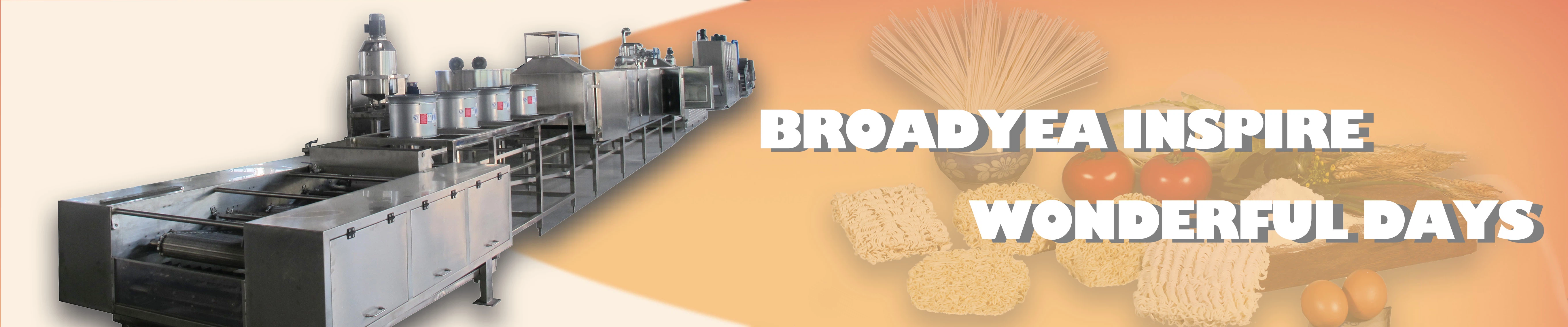
Drying Noodle Production Line
Dried noodle production lines offer a wide range of benefits and specialized features for clients looking to produce quality noodles efficiently and cost-effectively. These production lines can be customized to meet the specific needs of the client, whether they are producing hand-made, Hakka-style, or non-fried noodles. Here are some of the key advantages of using a dried noodle production line:
Efficient production: Dried noodle production lines are designed to maximize efficiency and productivity, with a range of features such as automatic mixing, cutting, and drying. This means that clients can produce large volumes of high-quality noodles in a relatively short amount of time and at a low cost.
Customizable features: Clients can customize their dried noodle production line depending on their specific needs and requirements. Some of the most common customizations include noodle thickness, length, and shape, as well as the type of flour and additives used.
Consistent quality: The use of automated systems in a dried noodle production line ensures consistency in terms of quality, texture, and flavor. This is especially important for clients who want to maintain a reputation for high-quality products.
What is Drying Noodle Production Line
Drying noodle production line refers to comprehensive industrial system designed for the automated and efficient manufacturing of dried noodles. This advanced production line typically encompasses various stages, starting from the initial mixing and kneading of the noodle dough to the final drying process. The production line is equipped with specialized machinery and conveyor systems that facilitate the seamless transition of the noodle dough through different phases, ensuring consistency and quality throughout the manufacturing process. Key components of the line include dough mixers, extruders for shaping the noodles, cutting machines to achieve the desired noodle length, and a drying system, which could involve air drying or advanced drying technologies like hot air tunnels or infrared drying. Production line may include packaging machinery for the convenient packaging of the final dried noodles.
Advantages of Drying Noodle Production Line
Increased efficiency and productivity
The automated nature of the production line streamlines the entire noodle manufacturing process, reducing the reliance on manual labor and significantly increasing overall efficiency. This results in higher production outputs and faster turnaround times.
Consistent product quality
The precision and control afforded by the machinery in the production line ensure a consistent quality of noodles. From the mixing of ingredients to the drying process, each stage is carefully monitored, minimizing variations in texture, taste, and appearance.
Hygienic manufacturing environment
Automated production lines are designed with hygiene in mind, minimizing the risk of contamination and ensuring compliance with strict food safety standards. Enclosed systems and sanitary materials contribute to maintaining a clean and sterile production environment.
Flexibility in noodle varieties
These production lines often come equipped with adjustable settings, allowing to easily switch between different noodle varieties. This flexibility enables the production of a diverse range of noodle products, catering to varying consumer preferences and market demands.
-
![High-performing Dried Noodle Production Line]() High-performing Dried Noodle Production LineProducts Description High-performing Dried Noodle Production Line is an advanced noodle production line designed by Broadyea. It adopts advanced technology to ensure the noodles are produced...read more
High-performing Dried Noodle Production LineProducts Description High-performing Dried Noodle Production Line is an advanced noodle production line designed by Broadyea. It adopts advanced technology to ensure the noodles are produced...read more -
![Commercial Non-fried Instant Noodle Production Line]() Commercial Non-fried Instant Noodle Production LineProducts Description Commercial Non-fried Instant Noodle Production Line is developed on the base of like products and requirement in the world market. The Commercial Non-fried Instant Noodle...read more
Commercial Non-fried Instant Noodle Production LineProducts Description Commercial Non-fried Instant Noodle Production Line is developed on the base of like products and requirement in the world market. The Commercial Non-fried Instant Noodle...read more -
![Non-Fried Noodle Production Line Equipment]() Non-Fried Noodle Production Line EquipmentProducts Description Broadyea non-fried instant noodle production line equipment is a modern and efficient production line that has been specifically designed to produce high-quality non-fried...read more
Non-Fried Noodle Production Line EquipmentProducts Description Broadyea non-fried instant noodle production line equipment is a modern and efficient production line that has been specifically designed to produce high-quality non-fried...read more -
![Large Capacity Non-fried Instant Noodle Line]() Large Capacity Non-fried Instant Noodle LineThe whole production line adopts PLC control, high automation and accurate control system to save labor cost and improve the quality of final products.read more
Large Capacity Non-fried Instant Noodle LineThe whole production line adopts PLC control, high automation and accurate control system to save labor cost and improve the quality of final products.read more -
![Fine Quality Dried Noodle Line]() Fine Quality Dried Noodle LineFine quality dried instant noodle line adopt advanced technologies and is of high automation, safety and easy maintenance.read more
Fine Quality Dried Noodle LineFine quality dried instant noodle line adopt advanced technologies and is of high automation, safety and easy maintenance.read more -
![Full Automatic Non-fried Instant Noodle Line]() Full Automatic Non-fried Instant Noodle LineBroadyea Machinery specializes in designing, manufacturing and installation instant noodle production line which can process square shape non-fried instant noodle and round shape dried instant...read more
Full Automatic Non-fried Instant Noodle LineBroadyea Machinery specializes in designing, manufacturing and installation instant noodle production line which can process square shape non-fried instant noodle and round shape dried instant...read more -
![Lager Capacity Dried Noodle Making Machine]() Lager Capacity Dried Noodle Making MachineHigh quality machine and authentic instant noodle making method are one of the most important point for producing perfect noodles. Broadyea can provide a professional advice and total solution for...read more
Lager Capacity Dried Noodle Making MachineHigh quality machine and authentic instant noodle making method are one of the most important point for producing perfect noodles. Broadyea can provide a professional advice and total solution for...read more -
![Easy Maintenance Dried Noodle Line]() Easy Maintenance Dried Noodle LineEasy maintenance dried noodle line is summing up the production equipment of development experience for many years, which adopts advanced technologies and high automation.read more
Easy Maintenance Dried Noodle LineEasy maintenance dried noodle line is summing up the production equipment of development experience for many years, which adopts advanced technologies and high automation.read more -
![Large Capacity Dried Instant Noodle Line]() Large Capacity Dried Instant Noodle LineDried instant noodle line is based on research of similar products at home and abroad,combined with the needs of the mass consumer market in China. Broadyea has more than thirty years experience...read more
Large Capacity Dried Instant Noodle LineDried instant noodle line is based on research of similar products at home and abroad,combined with the needs of the mass consumer market in China. Broadyea has more than thirty years experience...read more -
![High Effective Non Fried Instant Noodle Line]() High Effective Non Fried Instant Noodle LineHigh effective dried instant noodle line is the main product which is combined with our engineer group experience more than thirty years. We can customized the noodle line according to client's...read more
High Effective Non Fried Instant Noodle LineHigh effective dried instant noodle line is the main product which is combined with our engineer group experience more than thirty years. We can customized the noodle line according to client's...read more -
![Customized Non-fried Instant Noodle Line]() Customized Non-fried Instant Noodle LineIt is ideal Non-fried instant noodle production equipment in China. This production line is used to make dried instant noodles. Combined domestic and abroad technology, our machine is the most...read more
Customized Non-fried Instant Noodle LineIt is ideal Non-fried instant noodle production equipment in China. This production line is used to make dried instant noodles. Combined domestic and abroad technology, our machine is the most...read more -
![Stainless Steel Automatic Dried Instant Noodle Making Machine Production Line]() Stainless Steel Automatic Dried Instant Noodle Making Mac...All machines are made of stainless steel, healthy and sanitary.read more
Stainless Steel Automatic Dried Instant Noodle Making Mac...All machines are made of stainless steel, healthy and sanitary.read more


Why Choose Us
Professional team
Broadyea® who is specialized in Noodles Machinery Manufacture by R&D,production,sales,after-sales service,
Rich Experience
We have a great experienced design engineers and manufacture technicians with more than thirty years experience, which forms a rounded management system of rules and process.
Global Shipping
And our productions are exported to USA, Brazil, Roumania, Southeast of Asia and many other countries.
Custom Service
Our company are not only to provide the equipment to our customers, but also furnish customers with relevant the process of production and technical assistance, as well as the equipment of installation, setting-up, personnel training, after-sales service etc.
Types of Drying Noodle Production Line
Drying Machine for Instant Noodle is a specialized piece of industrial equipment designed for the rapid and efficient drying of instant noodle products. Instant noodles, known for their quick preparation and convenience, require a specific drying process to achieve the desired texture and shelf stability. This dedicated machine is an integral part of the instant noodle production line and employs advanced drying technologies to expedite the removal of moisture from the freshly formed noodles. The machine often utilizes methods such as hot air drying or flash frying to swiftly evaporate water content, allowing the noodles to attain the characteristic texture associated with instant varieties.
Large Capacity Dried Noodle Making Machine refers to an industrial-grade, high-capacity system specifically designed for the efficient and mass-scale production of dried noodles. This advanced machine is characterized by its substantial production capacity, allowing for the streamlined and automated manufacturing of large quantities of noodles. The equipment typically includes a series of integrated components such as powerful dough mixers for large-scale ingredient blending, robust extruders to shape the noodles uniformly, cutting-edge cutting machines for precise sizing, and an extensive drying system to accommodate the higher volume of noodles being processed.
Fine Quality Dried Noodle Line refers to an advanced and specialized industrial system designed for the precision manufacturing of high-quality dried noodles. This comprehensive production line is equipped with cutting-edge machinery and technology to ensure the production of noodles that meet stringent standards for texture, taste, and appearance. The process typically begins with precision mixing and kneading of high-quality ingredients to form the noodle dough. Advanced extruders are employed to shape the noodles consistently, and cutting-edge cutting machines ensure uniform lengths. The drying stage, a crucial component, involves sophisticated techniques such as hot air drying or infrared drying to preserve the integrity of the noodles while removing moisture.
Non-Fried Noodle Production Line Equipment refers to a specialized industrial system designed for the efficient and automated manufacturing of non-fried noodles. This comprehensive production line comprises various essential machinery and components tailored specifically for the production of noodles that undergo alternative cooking methods, such as steaming or hot air drying, rather than traditional deep-frying. The equipment involved typically includes dough mixers for thorough blending of ingredients, extruders for shaping the noodles, cutting machines to achieve the desired length, and a cooking or steaming apparatus to prepare the noodles without the use of oil.
How to Choose Drying Noodle Production Line


Production capacity
Determine your required output in terms of finished noodle products per unit of time. Choose a production line that matches or exceeds your production volume needs to ensure efficiency and meet market demands.
Automation level
Consider the level of automation required based on your production scale and labor availability. High levels of automation can enhance efficiency, reduce labor costs, and ensure consistency in product quality.
Drying technology
Evaluate the drying technology used in the production line. Common methods include hot air drying, infrared drying, or a combination of both. Choose a technology that aligns with your desired noodle characteristics and meets quality standards.
Flexibility and versatility
Assess the production line's capability to manufacture different types of noodles. A versatile production line allows for easy adjustments to produce various noodle varieties, meeting changing market demands.
Quality control mechanisms
Look for integrated quality control systems within the production line. This includes sensors, monitoring devices, and control mechanisms to ensure consistent quality throughout the manufacturing process.
Energy efficiency
Consider the energy efficiency of the production line, as it can impact operating costs and sustainability. Look for equipment with features that minimize energy consumption while maintaining optimal performance.
Space requirements
Evaluate the physical footprint of the production line equipment. Ensure that it fits within your available production space and allows for efficient workflow and future expansion if needed.
Material of Drying Noodle Production Line
Stainless steel
Stainless steel is a preferred material for parts that come into direct contact with food or ingredients. It is corrosion-resistant, easy to clean, and does not react with acidic or alkaline substances present in noodle ingredients.
Food-grade plastics
Certain non-contact parts, such as covers, panels, or components that do not directly handle food, may be made from food-grade plastics. These materials are chosen for their resistance to wear, ease of cleaning, and compliance with food safety standards.
Aluminum alloy
In some cases, aluminum alloy is used for components that do not require the same level of corrosion resistance as stainless steel. Aluminum is lightweight and can be suitable for specific non-food contact parts.
Coated surfaces
Some surfaces may be coated with materials like Teflon or other non-stick coatings to prevent the sticking of noodle dough or residue, making cleaning more efficient and ensuring smooth operation.
Corrosion-resistant materials
As the production line involves water and moisture during the noodle-making process, materials resistant to corrosion are crucial to ensure the longevity and reliability of the equipment.
Heat-resistant components
Given the drying process involved in noodle production, components that come in direct contact with heat or hot air are often made from heat-resistant materials to withstand the drying temperatures.
Seals and gaskets
Seals and gaskets used in the machinery are typically made from food-grade rubber or silicone to ensure a hygienic and safe production process, preventing the infiltration of contaminants.
Galvanized or coated frames
The frames and structural components of the production line may be made from materials like galvanized steel or coated steel to provide structural integrity, prevent rust, and ensure a clean and sanitary production environment.
Working principle of Drying Noodle Production Line revolves around a meticulously orchestrated sequence of steps to transform raw ingredients into finished dried noodles. Commencing with the precise blending and kneading of ingredients, such as flour and water, the noodle dough is systematically prepared to achieve the desired texture. Subsequently, the dough undergoes extrusion, a process where it is shaped into specific noodle forms through the application of pressure. Following extrusion, the continuous noodle strands are meticulously cut into individual portions of the desired length. For non-fried or instant noodles, a steam cooking or boiling phase ensues, partially cooking the noodles and preparing them for the subsequent drying stage. The crucial drying process unfolds next, employing technologies such as hot air drying or infrared drying to remove moisture, ensuring the noodles attain the characteristic texture and prolonged shelf life. Post-drying, a cooling phase stabilizes the temperature of the noodles, culminating in the packaging of the final product into consumer-ready units. Throughout this intricate production line, rigorous quality control measures are applied, with automated systems monitoring and adjusting factors like noodle thickness, length, and moisture content to maintain consistency. The overarching principles of precision, automation, and quality assurance underscore the efficient and systematic transformation of raw materials into high-quality dried noodles on an industrial scale.
How to Install Drying Noodle Production Line
Site preparation
Ensure that the production floor is prepared for the installation. This may involve cleaning the area, confirming adequate space for the production line, and verifying that the floor can support the weight of the machinery.
Utilities check
Confirm that all necessary utilities, such as electricity, water, and gas (if applicable), are available and meet the requirements of the new production line. Install any additional utility connections needed for the machinery.
Equipment layout planning
Work with the equipment to plan the layout of the production line. Consider the sequence of machines, the flow of raw materials and finished products, and accessibility for maintenance and operation.
Foundations and supports
If required, ensure that the foundations for heavy machinery are properly laid. Provide the necessary supports and structural reinforcements to ensure stability during operation.
Electrical wiring and connections
Hire qualified electricians to install and connect the electrical components of the production line. Ensure that wiring is done according to safety standards, and that the power supply meets the specifications of the equipment.
Mechanical installation
Assemble and install the individual machines of the production line according to the guidelines. This may involve aligning components, securing fasteners, and ensuring proper connections between machines.
Piping and plumbing
If the production line involves water or other fluid processes, hire qualified plumbers to install the necessary piping. Ensure that all connections are secure, and that there are no leaks.
Commissioning and testing
Once the machinery is installed, conduct a commissioning process. This involves testing each machine individually and as part of the entire production line. Check for proper functioning, alignment, and any issues that may arise.
Calibration and adjustment
Calibrate the machines to ensure accurate and consistent performance. Adjust settings according to the type of noodles being produced and any specific requirements of your production process.
Things to Note When Using Drying Noodle Production Line
Regular maintenance
Implement regular maintenance schedule for all machines in the production line. Regular checks, lubrication, and replacement of worn-out parts help prevent breakdowns and ensure continuous operation.
Quality control checks
Conduct frequent quality control checks throughout the production process. Monitor noodle thickness, length, and texture to maintain consistent product quality. Address any deviations from standards promptly.
Safety protocols
Emphasize and enforce safety protocols for operators. This includes proper use of machinery, wearing protective gear, and following established safety guidelines to prevent accidents and injuries.
Cleaning and sanitation
Establish thorough cleaning procedures for the production line. Regularly clean and sanitize all components that come in contact with the noodles to meet food safety standards and maintain a hygienic production environment.
Adjustments for different noodle types
If the production line is capable of producing different noodle varieties, ensure that operators are familiar with the adjustments required for each type. This may include changes in dough composition, cutting lengths, or drying times.
Monitoring and control systems
Regularly check and calibrate monitoring and control systems to ensure accurate operation. This includes temperature controls, drying times, and any automated features that contribute to the overall efficiency of the production line.
Downtime planning
Plan for downtime for scheduled maintenance and necessary adjustments. This ensures that the production line remains in optimal condition and minimizes the risk of unexpected breakdowns disrupting operations.
Energy efficiency
Monitor energy consumption and implement energy-efficient practices where possible. This not only contributes to cost savings but also aligns with sustainable manufacturing practices.
Record keeping
Maintain comprehensive records of production runs, quality control checks, maintenance schedules, and any modifications made to the production line. This documentation aids in traceability and continuous improvement efforts.
How to Control the Temperature and Humidity of the Drying Noodle Production Line
Environmental controls
Implement an HVAC (Heating, Ventilation, and Air Conditioning) system to regulate the overall temperature and humidity of the production area. This system should be capable of maintaining a controlled environment to meet the specific requirements of the noodle drying process.
Insulation and sealing
Ensure that the production area is well-insulated and properly sealed. This helps prevent external factors, such as ambient temperature and humidity fluctuations, from affecting the drying process. Insulation also contributes to energy efficiency.
Temperature monitoring
Install temperature monitoring devices throughout the production area. Regularly check and calibrate these devices to ensure accurate readings. Automated systems can be employed to adjust temperature settings based on real-time data.
Humidity monitoring
Implement humidity monitoring systems to continuously assess the moisture levels in the production environment. Automated controls can be employed to adjust humidity settings to maintain the desired levels for the noodle drying process.
Drying chamber design
Design the drying chamber with considerations for temperature and humidity control. Utilize materials that help maintain stable conditions and prevent heat or moisture loss. The chamber should be well-ventilated to facilitate air circulation.
Exhaust systems
Install exhaust systems to remove excess heat and moisture generated during the noodle drying process. Proper ventilation helps prevent the accumulation of humidity within the production area.
Airflow management
Optimize the airflow within the drying chamber. Ensure that the air circulation is uniform, reaching all parts of the noodles consistently. This can be achieved through the strategic placement of fans or air distribution systems.
Process timing
Adjust the drying time based on the ambient conditions. Longer drying times may be required on days with higher humidity levels, while shorter drying times may be suitable on drier days. Monitor and adapt to environmental changes accordingly.
Preventing condensation
Take measures to prevent condensation within the drying chamber. This includes insulating pipes and surfaces that may become cold, as condensation can negatively impact the drying process and product quality.
Weather considerations
Consider external weather conditions, especially in facilities without controlled environments. Adjust production schedules based on weather forecasts to mitigate the impact of external temperature and humidity variations.
Can the Drying Noodle Production Line Operate Continuously for Extended Periods
Built for continuous operation
Many Drying Noodle Production Lines are designed with durability and continuous operation in mind. They often feature robust construction, reliable components, and materials that can withstand the demands of prolonged use.
Automated systems
Production lines equipped with advanced automation systems are better suited for continuous operation. Automation reduces the need for manual intervention, improving efficiency and allowing the line to run seamlessly for extended periods.
Quality of components
The quality of individual components, such as motors, bearings, and control systems, plays a crucial role. High-quality components are more likely to withstand the wear and tear associated with continuous operation, reducing the risk of breakdowns.
Maintenance practices
Regular and proactive maintenance is essential for ensuring continuous operation. Adequate maintenance schedules, routine inspections, and prompt repairs or replacements of worn-out parts contribute to the longevity of the production line.
Cooling systems
In some noodle production lines, particularly those with continuous drying processes, effective cooling systems are integrated. These systems help manage the temperature of machinery, preventing overheating during prolonged operation.
Emergency protocols
Production lines should be equipped with emergency protocols and safety features. These include automatic shutdown systems in case of critical issues, ensuring the safety of both equipment and personnel during extended operation.
System redundancy
Some advanced production lines may incorporate redundancy in critical components or subsystems. Redundancy helps minimize downtime in case of component failure, supporting continuous operation.
Scheduled downtime
While continuous operation is possible, scheduled downtime for thorough maintenance and inspections is still advisable. This allows for proactive measures to address potential issues before they escalate and ensures the overall health of the production line.
How Is the Quality Control Maintained During the Drying Noodle Production Line


Raw material inspection
Quality control begins with the inspection of raw materials, such as flour, water, salt, and any additional ingredients. Verify the quality, freshness, and adherence to specifications of these inputs.
Automated mixing and kneading
Automated systems control the mixing and kneading processes to ensure uniform distribution of ingredients. Monitoring devices may be employed to measure consistency and quality of the noodle dough.
Extrusion and cutting precision
Advanced extrusion and cutting technologies contribute to the precision of noodle production. Sensors and cameras are often used to monitor and control the extrusion and cutting processes, ensuring consistent shapes and sizes.
Cooking or Steaming Monitoring
For non-fried or instant noodles, the cooking or steaming phase is monitored closely. Temperature and time parameters are controlled to achieve the desired level of partial cooking, preparing the noodles for the subsequent drying process.
Drying process control
During the drying phase, temperature and humidity levels are meticulously controlled. Automated systems adjust drying parameters to achieve the optimal moisture content and texture in the final product.
Moisture content measurement
Sensors are employed to measure the moisture content of the noodles during the drying process. This data helps ensure that the noodles reach the desired level of dryness for shelf stability without becoming too brittle.
Cutting and sizing consistency
Cutting machines are equipped with precision control mechanisms to maintain consistency in noodle length and thickness. This ensures uniformity in the final packaged product.
Color and texture analysis
Advanced systems may include color and texture analysis technologies. These tools evaluate the visual appearance and texture of noodles, allowing for real-time adjustments to maintain consistency.
Weight and portion control
Automated weighing systems control the portioning of noodles, ensuring that each package contains the specified weight. This contributes to consistency in consumer products
Packaging integrity checks
Quality control measures extend to the packaging stage. Automated systems may check for proper sealing, labeling accuracy, and overall packaging integrity to maintain product quality until it reaches consumers.
Maintenance Tips for Drying Noodle Production Line
Regular inspections
Conduct routine inspections of all machinery components, belts, bearings, and moving parts. Look for signs of wear, misalignment, or damage. Identify and address issues during the early stages to prevent more significant problems.
Lubrication
Ensure proper and regular lubrication of moving parts. Follow the guidelines for the type and frequency of lubrication to reduce friction, minimize wear, and prolong the life of the equipment.
Cleaning procedures
Implement thorough cleaning procedures for all components that come in contact with noodles. Regularly remove any residue or buildup, ensuring that the production line remains hygienic and compliant with food safety standards.
Belt tension checks
Check the tension of belts regularly. Loose or overly tight belts can affect the performance and lifespan of the machinery. Adjust tension according to recommendations.
Replace worn parts
Keep an inventory of spare parts, and replace any worn or damaged components promptly. This includes belts, gears, cutting blades, and any other parts subject to wear during regular operation.
Calibration checks
Periodically check and calibrate the equipment to ensure accurate and consistent performance. This is particularly important for cutting machines and drying systems to maintain product quality.
Temperature and humidity control
If applicable, regularly monitor and control the temperature and humidity in the drying area. Fluctuations in these conditions can impact the drying process and the overall quality of the noodles.
Check electrical connections
Inspect electrical connections and wiring regularly. Ensure that all connections are secure, and there are no exposed wires. Address any electrical issues promptly to prevent safety hazards.
Alignment verification
Verify the alignment of all machine components, especially after any maintenance or repairs. Misalignment can lead to increased wear and reduced efficiency.
Scheduled downtime for maintenance
Plan scheduled downtime for comprehensive maintenance tasks. This allows for more in-depth inspections, repairs, and preventive maintenance without interrupting regular production schedules.
Certifications

Our Factory
Broadyea Machinery is a company specializing in the noodle production line. It has become an important supplier of instant noodles machine industry at home and abroad, and has a wide sales network in domestic and foreign markets. Our company's instant noodle production equipment is not only excellent in quality, leading technology, but also provide turnkey solution for the whole project, so it is welcomed by various manufacturers.Our company's sales network is very extensive, and our products are sold all over the world.

FAQ
Q: What is a drying noodle production line?
Q: How does a drying noodle production line work?
Q: What types of noodles can be produced with a drying noodle production line?
Q: What are the advantages of using a drying noodle production line?
Q: The production line handle different types of flour?
Q: How is the temperature and humidity controlled in the noodle drying process?
Q: Is the production line suitable for small-scale operations?
Q: What maintenance practices are recommended for a drying noodle production line?
Q: Can the production line handle gluten-free or alternative grain noodles?
Q: How is the quality of the noodles ensured during production?
Q: Are there energy-efficient options for drying noodle production lines?
Q: Can the production line be customized for different noodle shapes and sizes?
Q: How long does it take to set up and install a drying noodle production line?
Q: What are the stages of noodles production?
Q: What safety features are integrated into the production line?
Q: Can the production line handle multiple noodle varieties simultaneously?
Q: How is waste managed in the noodle production process?
Q: Can the production line adapt to changing market trends?
Q: How are noodles manufactured?
Q: What is the typical lifespan of a drying noodle production line?
Guangzhou Broadyea Machinery Co., Ltd. is one of the most reliable manufacturers and suppliers of drying noodle production line in China. Our factory also supports customized service. Be free to get drying noodle production line made in China from us.
Automatic Noodle Making Machine Flour Conveying Equipment, Chinese Noodle Maker Machine Cooling Machine, Dried Noodle Line