

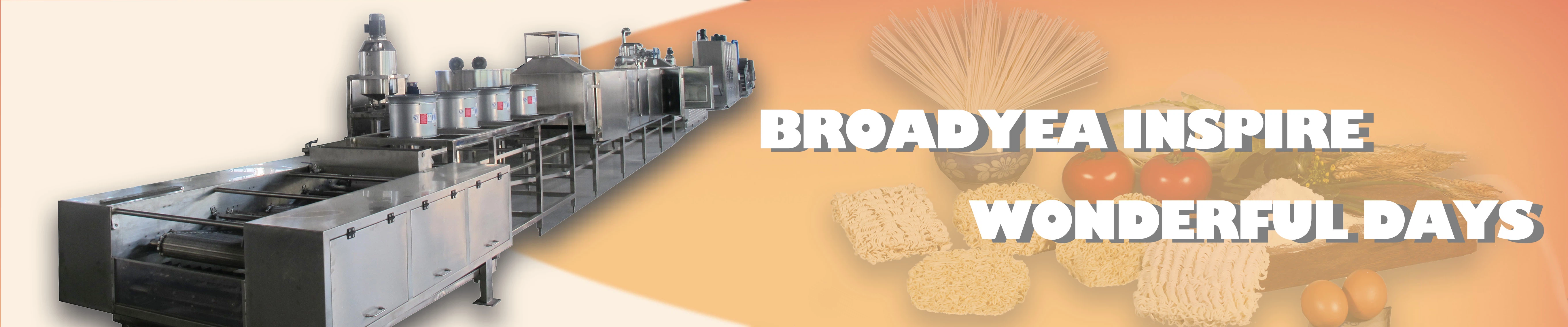
Frying Noodle Production Line
Fried noodle production lines are becoming increasingly popular in the food industry due to their numerous advantages and unique features. These production lines are highly beneficial for businesses that are looking to scale up their production, enhance quality control, and improve overall efficiency.
One of the greatest advantages of a fried noodle production line is its ability to be customized according to specific customer requirements. Depending on the type of noodles being produced, the line can be tailored to suit the size, shape, and texture of the product. This level of flexibility allows for a wider range of production and better customer satisfaction.
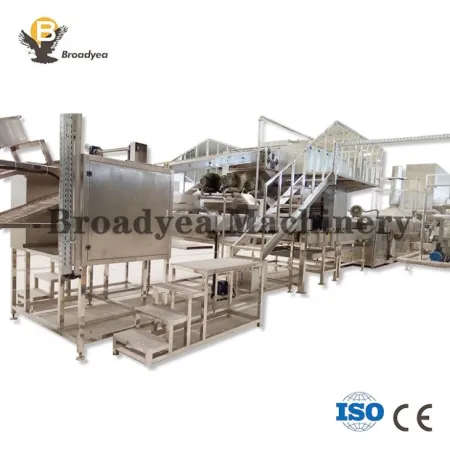
Adopts the processing of frying dehydration, which product the square noodle cake and round noodle cake, also we provide the cup noodle, bag noodle and bowl noodle for your choice. The size of noodle can customized by customer. Per shift is 30,000 to 240,000 pcs. Weight of noodle is 40 to 100 grams. Roller width is 300 to 1200 mm.
What is Frying Noodle Production Line
Frying noodle production line is a sophisticated system designed to efficiently produce ready-to-eat instant noodles. The entire process is automated, starting from the initial flour production to the final packaging.The main components of this production line include a raw material feeding system, a pre-cooking station, a cooking station, a cooling station, and a packaging machine. The raw materials, such as flour, oil, and seasonings, are fed into the system and undergo multiple processes to create the final produ.At the pre-cooking stage, the raw materials are mixed together and heated to activate the starch in the flour, making the noodles easier to handle during the cooking phase. The cooking station uses hot oil to fully cook the noodles, ensuring they are tender and flavorful.
Advantages of Frying Noodle Production Line
Increased efficiency and productivity
The frying noodle production line is designed to maximize efficiency and productivity. By automating the entire process, from raw material preparation to final packaging, the line can produce a large quantity of noodles in a short amount of time.
Consistency in quality and taste
The frying noodle production line ensures a consistent quality and taste in each batch of noodles produced. The automated machinery operates under strict controls and parameters, which eliminates human error and ensures that every noodle meets the same standards of thickness, texture, and flavor.
Energy efficiency and sustainability
Modern frying noodle production lines are designed with energy efficiency in mind. They utilize advanced technologies that reduce the consumption of electricity and natural resources, minimizing the carbon footprint of the manufacturing process.
Flexibility and customization
Frying noodle production line offers flexibility in terms of product variety and customization. Manufacturers can easily adjust the settings of the machines to produce different types of noodles with varying flavors, shapes, and sizes. This adaptability allows businesses to cater to diverse market demands and create unique products that stand out in the competitive marketplace.
-
![Fried Instant Noodle Line]() Fried Instant Noodle LineThis production line has the characteristics of fully automatic production, large output, energy saving, compact structure, beautiful appearance, stable performance, convenient operation and...read more
Fried Instant Noodle LineThis production line has the characteristics of fully automatic production, large output, energy saving, compact structure, beautiful appearance, stable performance, convenient operation and...read more -
![Fried Noodle Machine]() Fried Noodle MachineWith the popularity of fast food culture and the acceleration of people's pace of life, fast food is more and more popular among people, among which fried noodles is an indispensable one....read more
Fried Noodle MachineWith the popularity of fast food culture and the acceleration of people's pace of life, fast food is more and more popular among people, among which fried noodles is an indispensable one....read more -
![User-friendly Fried Noodle Production Line]() User-friendly Fried Noodle Production LineProducts Description User-friendly Fried Noodle Production Line is developed and continuous improved by our company on the basis of market demand. One of its most striking features is that the...read more
User-friendly Fried Noodle Production LineProducts Description User-friendly Fried Noodle Production Line is developed and continuous improved by our company on the basis of market demand. One of its most striking features is that the...read more -
![Multifunctional Instant Noodle Production Line]() Multifunctional Instant Noodle Production LineProducts Description Multifunctional Instant Noodle Production Line is an ideal production line for noodle factories. It is a high-tech production line that can produce different types of noodles...read more
Multifunctional Instant Noodle Production LineProducts Description Multifunctional Instant Noodle Production Line is an ideal production line for noodle factories. It is a high-tech production line that can produce different types of noodles...read more -
![Good Quality Fried Instant Noodle Production Line]() Good Quality Fried Instant Noodle Production LineGood Quality Fried Instant Noodle Production Line is designed by our company according to the market demand, which is summing up the production equipment experience for many years and realizes...read more
Good Quality Fried Instant Noodle Production LineGood Quality Fried Instant Noodle Production Line is designed by our company according to the market demand, which is summing up the production equipment experience for many years and realizes...read more -
![Fried Noodle Line]() Fried Noodle LineProducts Description Broadyea is one of the most trusted brands in the production of instant noodles, has a wide range of production lines for instant noodles. The Broadyea Noodle Production Line...read more
Fried Noodle LineProducts Description Broadyea is one of the most trusted brands in the production of instant noodles, has a wide range of production lines for instant noodles. The Broadyea Noodle Production Line...read more -
![High Efficiency Instant Noodle Production Line]() High Efficiency Instant Noodle Production LineLarge capacity instant noodle production line is our company based on research of similar products at home and abroad, combined with the needs of the instant noodle market in all over the world....read more
High Efficiency Instant Noodle Production LineLarge capacity instant noodle production line is our company based on research of similar products at home and abroad, combined with the needs of the instant noodle market in all over the world....read more -
![Customized Frying Noodles Line]() Customized Frying Noodles LineBroadyea Machinery is customized noodle making machine company. Fried instant noodles production line adopts traditional technology and has many advanced technologies, which is the domestic...read more
Customized Frying Noodles LineBroadyea Machinery is customized noodle making machine company. Fried instant noodles production line adopts traditional technology and has many advanced technologies, which is the domestic...read more -
![Fried Instant Noodle Line Working Stable]() Fried Instant Noodle Line Working StableBroadyea offers fried instant noodle line working stable, our company is a successful manufacturer and supplier, we devoted ourselves to noodle machine industry many years, we will provide...read more
Fried Instant Noodle Line Working StableBroadyea offers fried instant noodle line working stable, our company is a successful manufacturer and supplier, we devoted ourselves to noodle machine industry many years, we will provide...read more -
![Customized Instant Noodle Machine]() Customized Instant Noodle MachineBroadyea offers fried instant noodle line, non-fried noodle machine and cup instant noodle line, our company is a successful manufacturer and supplier, we devoted ourselves to noodle machine...read more
Customized Instant Noodle MachineBroadyea offers fried instant noodle line, non-fried noodle machine and cup instant noodle line, our company is a successful manufacturer and supplier, we devoted ourselves to noodle machine...read more -
![Modular Design Noodle Line]() Modular Design Noodle LineModular Design Noodle Line is characterized by our company according to the market demand, which is summing up the production equipment experience for many years and realizes high automation,...read more
Modular Design Noodle LineModular Design Noodle Line is characterized by our company according to the market demand, which is summing up the production equipment experience for many years and realizes high automation,...read more -
![Customized Automatic Noodle Line]() Customized Automatic Noodle LineFried instant noodles production line adopts traditional technology and has many advanced technologies. Broadyea is designed by our company according to the market demand, which absorbs the...read more
Customized Automatic Noodle LineFried instant noodles production line adopts traditional technology and has many advanced technologies. Broadyea is designed by our company according to the market demand, which absorbs the...read more


Why Choose Us
Professional team
Broadyea® who is specialized in Noodles Machinery Manufacture by R&D,production,sales,after-sales service,
Rich Experience
We have a great experienced design engineers and manufacture technicians with more than thirty years experience, which forms a rounded management system of rules and process.
Global Shipping
And our productions are exported to USA, Brazil, Roumania, Southeast of Asia and many other countries.
Custom Service
Our company are not only to provide the equipment to our customers, but also furnish customers with relevant the process of production and technical assistance, as well as the equipment of installation, setting-up, personnel training, after-sales service etc.
Types of Frying Noodle Production Line
With the popularity of fast food culture and the acceleration of people's pace of life, fast food is more and more popular among people, among which fried noodles is an indispensable one. Fried noodle machine is a new type production line by Broadyea carefully developed, which can produce 160,000 pcs/8hours capacity, with high production effeciency and simple operation, just put the raw material and set the parameter on the touch screen then the machine can produce the finished-product.
Good Quality Fried Instant Noodle Production Line is specially designed for producing fried instant noodles. It has the characteristics of high automation, convenient operation, low energy consumption, stable performance and good product quality. The noodle making process involves several stages, including mixing and kneading the dough, shaping the noodles and then frying them in hot oil. The frying process is carefully monitored to ensure the noodles are cooked to perfection, with a crispy texture and a delicious flavor.
Customized Automatic Noodle Line adopts traditional technology and has many advanced technologies, which achieves the perfect combination of mechanical and electrical integration. The noodle line is fully automatic, which is used in producing fried instant noodle.
High speed instant noodle making machine is developed on the basis of advanced products and requirements in the world market, which assures all working procedures from flour transport system to finished products can be accomplished once. Choosing a right frying noodle production line is extremely important in any type of manufacturing business. It is advisable to take expert advice in getting the most suitable machine according to your specific requirement, and make sure all the quality and profitability of the product.
How to Choose Frying Noodle Production Line
Production capacity
Assess your production needs and choose a production line with a capacity that aligns with your expected output. Consider factors such as the size of your target market and potential growth in demand.
Noodle varieties
Determine the types of noodles you plan to produce, such as instant noodles, ramen noodles, or other varieties. Ensure that the production line is versatile and can accommodate different noodle styles and shapes.
Automation level
Evaluate the level of automation the production line offers. Fully automated systems can enhance efficiency, reduce labor costs, and ensure consistency in the quality of the noodles. However, semi-automated options may be more suitable for smaller-scale operations.
Processing steps
Consider the entire noodle production process, including dough mixing, sheeting, cutting, steaming, frying, and cooling. Choose a production line that covers all necessary steps efficiently while meeting your desired level of automation.
Quality control features
Look for quality control features such as thickness control, weight control, and color control in the production line. These features contribute to the consistency and quality of the final product.
Materials and construction
Assess the materials used in the construction of the production line. Stainless steel is commonly preferred for its durability and ease of cleaning, ensuring a hygienic production environment.
Ease of cleaning and maintenance
Choose a production line that is easy to clean and maintain. Quick disassembly of components, access to critical areas, and minimal downtime for maintenance contribute to operational efficiency.
Energy efficiency
Consider the energy consumption of the production line. Opt for models that are energy-efficient to reduce operational costs and contribute to sustainability efforts.
Space requirements
Evaluate the physical footprint of the production line and ensure it fits within your production facility. Consider the layout and arrangement of the equipment to optimize workflow.
Customization options
Check if the production line offers customization options for noodle size, shape, and texture. The ability to adjust parameters according to your specific product requirements adds flexibility to your manufacturing process.
Material of Frying Noodle Production Line


Frame and structure
Stainless steel: Often used for the frame and structural components due to its durability, corrosion resistance, and ease of cleaning.
Conveyor belts
Food-grade stainless steel or food-grade plastic: Conveyor belts are usually made from food-grade stainless steel or plastic to meet hygiene standards and ensure safe food processing.
Mixing and dough processing components
Stainless steel: Parts involved in mixing and dough processing are commonly made from stainless steel for its corrosion resistance, durability, and suitability for food contact.
Noodle cutting components
High-quality stainless steel: Components responsible for cutting or shaping the noodles are often made from high-quality stainless steel to withstand the cutting process and maintain hygiene.
Frying equipment
Stainless steel or heat-resistant alloys: Frying equipment is typically constructed from stainless steel or heat-resistant alloys to withstand high temperatures during the frying process.
Oil filtration system
Stainless steel: Components related to the oil filtration system are often made from stainless steel to resist corrosion and maintain cleanliness.
Control panels and electronics
Stainless steel or food-grade plastics: Casings for control panels and electronic components may be made from stainless steel or food-grade plastics, ensuring durability and cleanliness.
Cooling and drying components
Stainless steel or food-grade plastics: Parts involved in the cooling and drying process may be made from stainless steel or food-grade plastics to meet food safety requirements.
Packaging equipment
Stainless steel or food-grade materials: Packaging equipment is commonly constructed from stainless steel or other food-grade materials to comply with hygiene standards and ensure the safety of the packaged noodles.
Application Of Frying Noodle Production Line
Frying noodle production lines are commonly employed in the production of ramen noodles, a popular Japanese noodle variety. These lines can be customized to produce different styles and textures of ramen noodles, catering to diverse consumer preferences.
Noodle co-packaging
Co-packers specializing in noodle production use frying noodle production lines to fulfill the manufacturing needs of various brands and private labels. This application supports the co-packing industry's ability to meet diverse client requirements.
Snack noodle production
The production line is used to manufacture snack noodles, which are often seasoned, flavored, and fried. These snack noodles come in various shapes and sizes, serving as a popular and convenient snack option.
Retail and food service
Restaurants, foodservice establishments, and retail outlets utilize frying noodle production lines to meet the demand for fresh noodles. These lines contribute to the efficient and consistent production of noodles for use in a variety of dishes.
Catering and institutional cooking
Facilities that cater to large groups, such as schools, hospitals, and cafeterias, benefit from the high-capacity production capabilities of frying noodle production lines. The lines can efficiently produce large quantities of noodles for institutional use.
The working principle of a Frying Noodle Production Line revolves around a systematic and sequential process aimed at transforming raw ingredients into finished, ready-to-eat fried noodles. The production line initiates with the meticulous mixing of essential components, such as wheat flour, water, salt, and additives, to form a homogenous noodle dough. This dough undergoes shaping and sizing through a dough sheeter or roller, creating the distinctive form of the noodles. Following this, the noodles are partially steamed, a crucial step that solidifies their structure. The subsequent frying stage involves submerging the noodles in hot oil, imparting the desired flavor, color, and crispiness. The fried noodles then undergo oil draining to remove excess oil, followed by a cooling process to set them at an appropriate temperature. Depending on the product specifications, seasoning may be applied to enhance the flavor profile. The final phase encompasses packaging, where the noodles are accurately weighed, portioned, and sealed for freshness. Throughout this entire process, automated control systems, including programmable logic controllers and human-machine interfaces, ensure precision, consistency, and quality control, contributing to the efficiency and reliability of the Frying Noodle Production Line.
The Manufacturing Process of Frying Noodle Production Line
Component fabrication
The various components of the production line, such as the dough mixer, sheeter, fryer, and packaging machinery, are fabricated. High-quality materials, often stainless steel for its durability and hygiene properties, are used to ensure the longevity of the equipment.
Electrical and control system integration
Electrical components, including motors, sensors, and control systems, are integrated into the design. Programmable logic controllers (PLCs) and human-machine interfaces (HMIs) are incorporated to automate and control the production process.
Assembly of subsystems
Subsystems, such as the dough mixing system, shaping and cutting mechanisms, steaming unit, frying unit, and cooling system, are assembled. Precision is crucial to ensure seamless integration and optimal performance.
Testing and quality control
The assembled production line undergoes rigorous testing to verify the functionality of each subsystem and the overall performance. Quality control checks are conducted to identify and rectify any defects or inconsistencies.
Adjustments and calibration
Fine-tuning and calibration of the equipment are carried out to ensure accurate processing parameters, such as dough consistency, noodle thickness, frying temperature, and packaging precision. This stage contributes to the overall efficiency of the production line.
Installation of safety features
Safety features, including emergency stop buttons, interlocks, and protective guards, are installed to comply with industry regulations and ensure the safety of operators during operation.
Integration of cooling and seasoning units
If the production line includes additional features such as cooling or seasoning units, these are integrated into the system. This customization allows for versatility in meeting various product specifications.
Final assembly and inspection
The fully assembled Frying Noodle Production Line undergoes a final inspection to confirm that all components are correctly installed, and the equipment meets the specified design criteria.
Packaging and shipment
The manufactured Frying Noodle Production Line is carefully packaged to prevent damage during transportation. It is then shipped to the designated location, often a food manufacturing facility or processing plant.
Installation and commissioning
Upon arrival at the destination, the production line is installed and commissioned by trained technicians. This involves setting up the equipment, conducting initial tests, and ensuring that the system operates as intended.
Operation Details About Frying Noodle Production Line
Startup procedures
Initiate the production line by following the recommended startup procedures. Ensure all components are correctly positioned and connected before powering on the equipment.
Dough mixing
Load raw ingredients into the dough mixer, including wheat flour, water, salt, and additives. Set mixing parameters for time and speed to achieve a homogeneous noodle dough.
Dough sheeting and forming
Feed the mixed dough into the sheeter or roller, adjusting settings for noodle thickness, shape, and size based on product specifications. Form the noodles as per the desired characteristics.
Steaming and partial cooking
Transfer formed noodles to the steaming unit, setting parameters for time and temperature to partially cook and set the noodles. Ensure the steaming process aligns with product requirements.
Frying process
Move partially steamed noodles to the frying unit, submerging them in hot oil. Monitor and control frying temperature to achieve the desired texture and color. Implement quality checks during the frying process.
Oil draining and cooling
Allow the fried noodles to undergo an oil draining process to remove excess oil. Direct the noodles to the cooling unit, setting parameters to prevent sticking. Verify the functionality of the draining and cooling mechanisms.
Seasoning and flavoring
If seasoning is part of the process, apply flavors or seasonings to the fried and cooled noodles. Ensure even distribution for consistent taste and adhere to specified seasoning requirements.
Packaging and quality control
Weigh and portion noodles according to packaging specifications. Direct noodles to packaging machinery for sealing. Implement quality control measures throughout the process, checking consistency, thickness, color, and overall quality.
Things to Note When Using Frying Noodle Production Line
Quality control measures
Implement rigorous quality control checks at every stage of the production process. Monitor noodle consistency, thickness, color, and overall quality to maintain product standards.
Regular maintenance
Establish a routine maintenance schedule for the Frying Noodle Production Line. Regularly inspect and lubricate machinery, replace worn-out parts, and address any issues promptly to prevent downtime.
Cleaning procedures
Follow thorough cleaning procedures for components that come in contact with ingredients. Maintain a hygienic production environment to ensure food safety and prevent contamination.
Monitoring and adjustment
Continuously monitor the production line for deviations or irregularities. Promptly address any issues and make necessary adjustments to maintain optimal performance and consistency.
Energy efficiency
Consider energy efficiency when operating the production line. Optimize settings, monitor energy consumption, and explore ways to reduce environmental impact while maintaining productivity.
Components of Frying Noodle Production Line
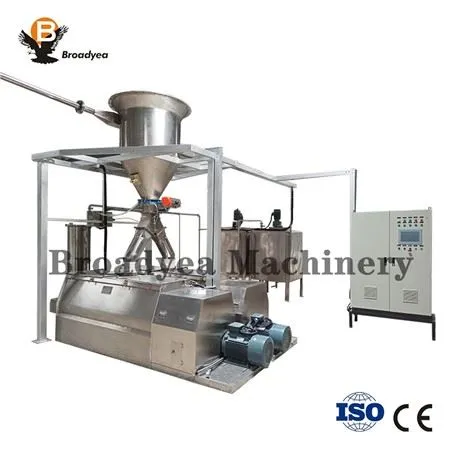
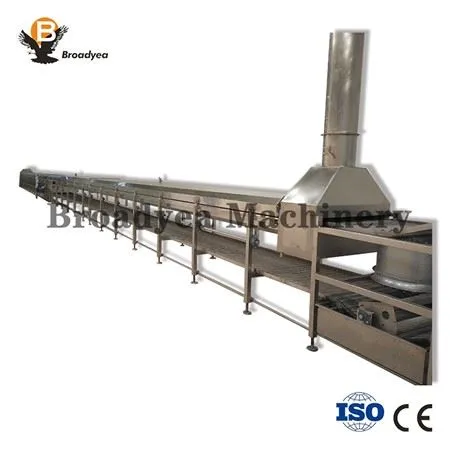
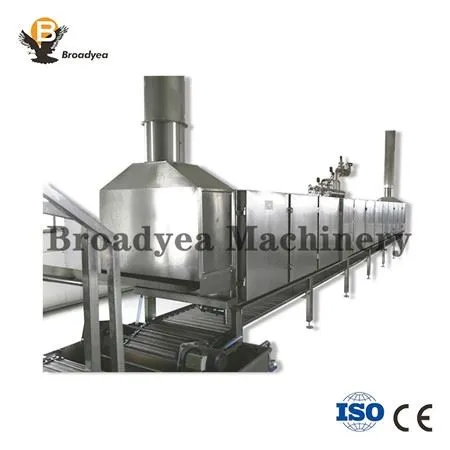
Dough mixer
The dough mixer is responsible for combining raw ingredients such as wheat flour, water, salt, and additives to create a uniform noodle dough. It ensures proper hydration and mixing of ingredients.
Dough sheeter or roller
This component processes the noodle dough, flattening it into a sheet of consistent thickness. It also shapes the dough into the desired form, preparing it for the subsequent stages of production.
Steaming unit
The steaming unit partially cooks and sets the noodles. It plays a crucial role in determining the texture and structure of the noodles before they undergo the frying process.
Frying unit
The frying unit submerges the partially steamed noodles in hot oil, imparting the characteristic crispy texture and golden color. It is a key component for enhancing the flavor and appearance of the final product.
Oil draining mechanism
After frying, excess oil is drained from the noodles to improve their overall quality. The oil draining mechanism ensures that the fried noodles are not overly greasy.
Cooling unit
The cooling unit lowers the temperature of the fried noodles to prevent them from sticking together. It prepares the noodles for subsequent processing and packaging.
Seasoning applicato
In cases where additional flavoring or seasoning is required, a seasoning applicator may be included. This component evenly applies seasonings or flavors to the fried noodles.
Packaging machinery
The packaging machinery is responsible for weighing, portioning, and packaging the fried noodles into containers. It ensures precision in packaging and may include sealing mechanisms for freshness.
Conveyor systems
Conveyor systems transport the noodles between different stages of the production line. They facilitate the smooth flow of noodles from one component to another.
Control and automation system
The control and automation system consists of programmable logic controllers (PLCs) and human-machine interfaces (HMIs) that monitor and control the entire production process. It regulates parameters such as temperature, speed, and timing.
Safety features
Safety features include emergency stop buttons, interlocks, and protective guards to ensure operator safety during equipment operation. These features comply with safety standards and regulations.
Supporting structures
The production line may include supporting structures and frames that house the various components. These structures provide stability and support for the entire system.
Exhaust systems
Exhaust systems are installed to manage fumes and heat generated during the frying process. They contribute to a safe and comfortable working environment for operators.
Cleaning and maintenance access points
Designated access points and features facilitate easy cleaning and maintenance of the equipment. Quick disassembly and access to critical areas simplify routine maintenance tasks.
What Safety Features Are Typically Incorporated into Frying Noodle Production Lines
Emergency stop buttons
Emergency stop buttons are strategically placed at accessible locations on the production line. Pressing these buttons immediately halts the operation of the machinery in case of an emergency.
Interlocks
Interlocks are safety mechanisms that prevent certain actions or movements unless specific conditions are met. For example, a machine may be designed to stop if a safety gate is open or if a protective cover is not in place.
Protective guards
Protective guards are physical barriers placed around moving parts or potentially hazardous areas of the machinery. These guards prevent operators from coming into direct contact with moving components, reducing the risk of injury.
Safety sensors
Safety sensors are installed to detect abnormal conditions or the presence of operators in restricted areas. They can trigger automatic shutdowns or alerts if a safety hazard is detected.
Emergency lighting
Emergency lighting ensures visibility in the production area during power outages or other emergencies. Well-lit spaces help operators navigate safely and locate emergency exits or equipment controls.
Overload protection
Overload protection mechanisms prevent the machinery from exceeding its designed capacity. This feature helps avoid equipment failures, breakdowns, and potential hazards associated with overloading.
Automatic shutdown for abnormal conditions
Production lines are equipped with systems that automatically shut down the equipment if abnormal conditions are detected. This could include deviations in temperature, pressure, or other critical
parameters.
Safety audits and inspections
Regular safety audits and inspections are conducted to identify potential hazards, assess the condition of safety features, and ensure that the production line complies with safety standards and regulations.
Fire prevention measures
Fire prevention measures, such as fire extinguishers, fire alarms, and fire-resistant materials, are incorporated to mitigate the risk of fire hazards in the production area.
Exhaust and ventilation systems
Adequate exhaust and ventilation systems are in place to remove fumes, heat, and airborne particles generated during the frying process, contributing to a safer working environment.
How to Maintain Frying Noodle Production Line
Routine cleaning: Establish a regular cleaning schedule for all components that come in contact with ingredients. Remove any residual dough, oil, or seasoning to prevent contamination and maintain hygiene.
Lubrication of moving parts: Regularly lubricate moving parts such as conveyor belts, gears, and bearings to reduce friction and prevent wear and tear. Follow the manufacturer's recommendations for the type and frequency of lubrication.
Inspection of components: Conduct regular visual inspections of all components, including belts, chains, rollers, and fryer parts. Look for signs of wear, damage, or misalignment, and address issues promptly.
Tightening loose fasteners: Check and tighten any loose fasteners, bolts, or nuts on the machinery. Vibrations during operation can cause components to loosen over time, leading to potential malfunctions.
Calibration of equipment: Regularly calibrate the equipment to ensure accurate settings for dough thickness, frying temperature, and other parameters. This helps maintain consistency in product quality.
Testing safety features: Verify the functionality of safety features, including emergency stop buttons, interlocks, and protective guards. Ensure that these features are in good working order to prevent accidents and ensure operator safety.
Electrical system inspection: Inspect the electrical components, wiring, and connections for signs of wear, damage, or overheating. Address any electrical issues promptly to prevent electrical failures.
Replacement of worn parts: Keep an inventory of spare parts and replace any worn-out or damaged components. This includes belts, seals, heating elements, and any other parts that may experience wear during operation.
Monitoring oil quality: If the production line includes a frying unit, regularly monitor the quality of frying oil. Establish a schedule for oil filtration and replacement to ensure the consistent quality of fried noodles.
Certifications

Our Factory
Broadyea Machinery is a company specializing in the noodle production line. It has become an important supplier of instant noodles machine industry at home and abroad, and has a wide sales network in domestic and foreign markets. Our company's instant noodle production equipment is not only excellent in quality, leading technology, but also provide turnkey solution for the whole project, so it is welcomed by various manufacturers.Our company's sales network is very extensive, and our products are sold all over the world.

FAQ
Q: What is a Frying Noodle Production Line?
Q: What are the key components of a Frying Noodle Production Line?
Q: Why is stainless steel commonly used in the construction of these production lines?
Q: Can Frying Noodle Production Lines accommodate different noodle sizes and shapes?
Q: Are Frying Noodle Production Lines suitable for small-scale businesses?
Q: How is the frying process controlled to ensure consistent product quality?
Q: What measures are taken to maintain the cleanliness of the oil in the frying process?
Q: Can these production lines handle gluten-free or specialty noodles?
Q: How is the cooling and drying process managed after frying?
Q: What safety features are typically incorporated into Frying Noodle Production Lines?
Q: Can Frying Noodle Production Lines produce instant noodles?
Q: How is the consistency of the noodle dough maintained throughout the production process?
Q: Is there a specific maintenance schedule for Frying Noodle Production Lines?
Q: Can these production lines handle different flavors or inclusions in the noodles?
Q: How is the packaging process integrated into Frying Noodle Production Lines?
Q: What is the slow drying process of pasta?
Q: Are there energy-efficient options available for Frying Noodle Production Lines?
Q: Can Frying Noodle Production Lines operate continuously for extended periods?
Q: Are noodles made by frying?
Q: What is the process of dry noodles?
Guangzhou Broadyea Machinery Co., Ltd. is one of the most reliable manufacturers and suppliers of frying noodle production line in China. Our factory also supports customized service. Be free to get frying noodle production line made in China from us.
Industrial Instant Noodle Making Machine, Automatic Frying Noodle Maker Frying Machine, Automatic Noodle Line Made in China