

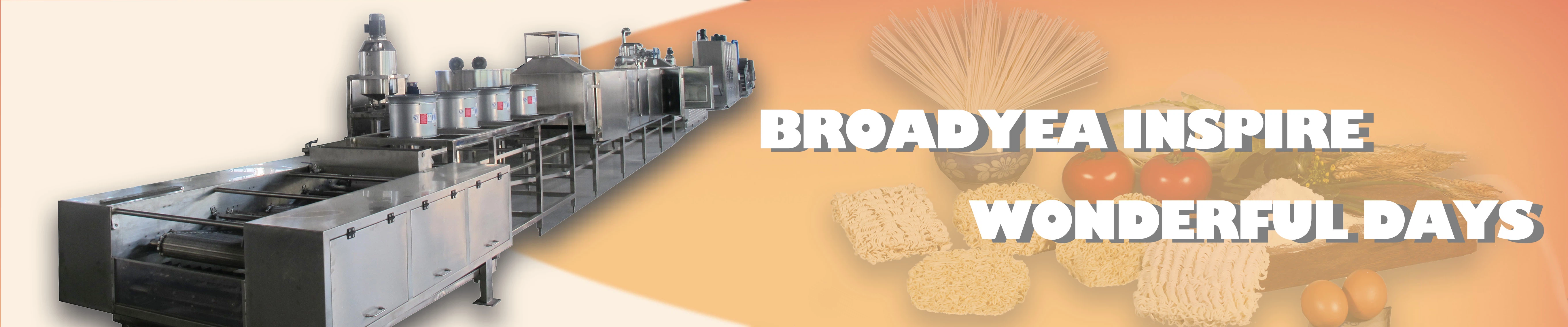
Instant Noodle Production Line
Broadyea specializes in Noodles Machinery Manufacture. Instant noodle production lines are revolutionizing the food industry with their numerous advantages and features. These technological advancements bring a host of benefits for manufacturers, customers, and the environment alike. Let's look at some of the advantages of instant noodle production lines:
Faster Production Time: The use of instant noodle production lines speeds up the process of manufacturing noodles, which allows manufacturers to produce large quantities in a shorter timeframe. This means that they can meet the increasing demand for instant noodles and meet the needs of customers around the world.
Consistent Quality: One of the best features of instant noodle production lines is their ability to produce noodles with consistent quality. This is due to the standardization of production processes, which reduces the risk of human error and ensures that each noodle has the same size and texture.
Flexibility: Instant noodle production lines can be easily customized to produce different types of noodles, sauces and flavors. This flexibility enables food manufacturers to continually innovate by introducing new products to the market.
Broadyea Machinery instant noodle production line can be customized according to client's requirement. Provide you a high quality and full after-sale service.
Instant noodle production line is an advanced system designed to efficiently produce ready-to-eat noodles. It is characterized by high automation, ease of operation, and energy conservation, offering a small footprint and low investment costs.The main components of such a line include a dough mixer, a roller pressing machine, a boiling machine, a cutting machine, an electric fryer, a cooler, and a packaging machine. The process starts with mixing the raw materials, including flour, water, and oil, to form dough. The dough is then pressed into sheets, boiled, cut into strips, and finally packaged.One notable feature of this production line is its fast drying speed, typically around 70 seconds per batch, which allows for high degrees of starch gelatinization, enhancing the noodles' rehydration properties. Despite containing about 20%-24% oil, the production line ensures the cost remains relatively low.
Advantages of Instant Noodle Production Line
Perfect process
The production line has a perfect process, a compact structure, a novel design, and stable and reliable performance. The automatic instant noodle making equipment is automatically completed from flour to finished products. With simple operation, moderate output, energy saving, small floor space, and low investment, it provides quick results.
High efficiency
The drying speed of the production line is fast (about 70 seconds per batch), and the gelatinization degree is high (over 85%). The noodles have a porous interior due to rapid evaporation and dehydration in a short time, so the product has good rehydration and is in wastewater. It can be eaten after soaking for 3 minutes, with high convenience and pleasant frying fragrance.
Modular design
The modular design of the production line allows for easy maintenance and repair, reducing downtime and increasing uptime.
Flexibility
The production line can be easily modified to accommodate different types of instant noodles, allowing for flexibility in product offerings.
-
![Automatic Full Instant Noodle Production Line]() Automatic Full Instant Noodle Production LineFried instant noodle production can produced bag and cup instant noodle in one line Capacity: 150,000pcs/8hours (weight 65g) Roller width: 600mm Total powder: 130kw Steam consumption: 2500kgread more
Automatic Full Instant Noodle Production LineFried instant noodle production can produced bag and cup instant noodle in one line Capacity: 150,000pcs/8hours (weight 65g) Roller width: 600mm Total powder: 130kw Steam consumption: 2500kgread more -
![Professional FM600MM Noodle Line]() Professional FM600MM Noodle LineFM600mm Noodle Line is our main capacity production line, the capacity is about 150,000 to 180,000pcs/8hrs.Our production line adopts advanced technologies and is high automation.read more
Professional FM600MM Noodle LineFM600mm Noodle Line is our main capacity production line, the capacity is about 150,000 to 180,000pcs/8hrs.Our production line adopts advanced technologies and is high automation.read more -
![Low Noisy Fried Instant Noodle Machine]() Low Noisy Fried Instant Noodle MachineFried instant noodle processing line, which is our mainread more
Low Noisy Fried Instant Noodle MachineFried instant noodle processing line, which is our mainread more -
![Noodle Production Process]() Noodle Production ProcessNoodle Production Process Broadyea Machinery specializes in making noodles production line, who provide advanced production and integrated solution for flour enterprises around the world. We have...read more
Noodle Production ProcessNoodle Production Process Broadyea Machinery specializes in making noodles production line, who provide advanced production and integrated solution for flour enterprises around the world. We have...read more -
![Noodle Line]() Noodle LineIntroduction Of Different Kinds Of Noodle Line Broadyea Machinery specailizes in noodles machinery manufacture, who provides advanced product lines and integrated solutions for flour products...read more
Noodle LineIntroduction Of Different Kinds Of Noodle Line Broadyea Machinery specailizes in noodles machinery manufacture, who provides advanced product lines and integrated solutions for flour products...read more -
![Noodle Production Line]() Noodle Production LineInstant noodles become one of the major modern food in around the world, which is characterized by: convenient, diverse tastes to meet the people's demand for food. So we specializes in the...read more
Noodle Production LineInstant noodles become one of the major modern food in around the world, which is characterized by: convenient, diverse tastes to meet the people's demand for food. So we specializes in the...read more -
![Instant Noodle Making Machine]() Instant Noodle Making MachineInstant Noodle Making Machine become one of the major modern food consumption, which is characterized by: convenient, diverse tastes to meet the people's demand for food. We specializes in the...read more
Instant Noodle Making MachineInstant Noodle Making Machine become one of the major modern food consumption, which is characterized by: convenient, diverse tastes to meet the people's demand for food. We specializes in the...read more -
![Noodles Production Machinery]() Noodles Production MachineryNoodles Production Machinery Description Of Noodles Production Machinery Type of Broadyea 600MM instant noodle production line is designed by our company according to the market demand, which...read more
Noodles Production MachineryNoodles Production Machinery Description Of Noodles Production Machinery Type of Broadyea 600MM instant noodle production line is designed by our company according to the market demand, which...read more -
![Instant Noodle Machine]() Instant Noodle MachineInstant Noodle Machine Introduction Of Instant Noodle Machine Instant noodle production line is summing up the production equipment of development experience for many years and the basic of...read more
Instant Noodle MachineInstant Noodle Machine Introduction Of Instant Noodle Machine Instant noodle production line is summing up the production equipment of development experience for many years and the basic of...read more -
![Instant Noodle Production Line]() Instant Noodle Production LineInstant Noodle Production Line is the mainly products in Broadyea, which specializes in noodle machinery more than twenty years. Broadyea give us the totally solution for customized.read more
Instant Noodle Production LineInstant Noodle Production Line is the mainly products in Broadyea, which specializes in noodle machinery more than twenty years. Broadyea give us the totally solution for customized.read more -
![Instant Noodle Making Equipment]() Instant Noodle Making EquipmentInstant Noodle Making Equipment Introduction Of Instant Noodle Making Equipment Type of instant noodle making equipment is designed by the production machine of development experience for many...read more
Instant Noodle Making EquipmentInstant Noodle Making Equipment Introduction Of Instant Noodle Making Equipment Type of instant noodle making equipment is designed by the production machine of development experience for many...read more -
![Noodle Making Machine]() Noodle Making MachineNoodle Making Machine adopts full automatic operation from mixer to the end. Adopts PLC control different parts which can reduce the laborer and increase the product efficient.read more
Noodle Making MachineNoodle Making Machine adopts full automatic operation from mixer to the end. Adopts PLC control different parts which can reduce the laborer and increase the product efficient.read more


Why Choose Us
Professional team
Broadyea® who is specialized in Noodles Machinery Manufacture by R&D,production,sales,after-sales service,
Rich Experience
We have a great experienced design engineers and manufacture technicians with more than thirty years experience, which forms a rounded management system of rules and process.
Global Shipping
And our productions are exported to USA, Brazil, Roumania, Southeast of Asia and many other countries.
Custom Service
Our company are not only to provide the equipment to our customers, but also furnish customers with relevant the process of production and technical assistance, as well as the equipment of installation, setting-up, personnel training, after-sales service etc.
Types of Instant Noodle Production Line
Batch production line
This type of production line is characterized by the manufacturing of instant noodles in smaller, manageable batches.Suitable for smaller-scale operations, it often involves manual or semi-automated processes, making it an option for start-ups or businesses with limited production demands.
Semi-automatic production line
Combining elements of automation with manual processes, semi-automatic production lines are commonly employed in mid-sized facilities.With improved efficiency compared to batch production, these lines strike a balance by incorporating automated features in key production stages while still requiring some manual intervention.
Fully automatic production line
This type of production line is highly automated and designed for large-scale instant noodle manufacturing.Offering high production capacity and minimal manual intervention, fully automatic lines provide precise control over various stages of production, ensuring efficiency and consistency.
Cup noodle production line
Specifically engineered for the production of cup noodles, where noodles and seasonings are packaged in cups.In addition to noodle production, these lines include cup forming, filling, and sealing processes, catering to the popular convenience of cup noodles.
Bag noodle production line
Tailored for the production of instant noodles packaged in bags.These lines encompass noodle production, seasoning, and bagging processes, making them suitable for both small and large-scale operations.
Non-fried instant noodle production line
Geared towards the production of healthier instant noodles that undergo non-fried processing.These lines utilize methods such as steaming or hot air drying instead of traditional frying, aligning with the growing demand for healthier food options.
How to Choose Instant Noodle Production Line
Automation level
Assess the desired level of automation. Fully automatic lines offer high efficiency and precision, while semi-automatic lines may provide a balance between automation and manual intervention. Select the level of automation that suits the available resources and production requirements.
Product specifications
Define the specific characteristics of the instant noodles you intend to produce, such as size, thickness, texture, and packaging format. Ensure the chosen production line can accommodate these specifications.
Processing methods
Determine the preferred processing methods for noodle production. Traditional frying, non-fried methods (steaming or hot air drying), or a combination of these influence the choice of the production line.
Packaging options
Consider the packaging format – whether it's cup noodles, bagged noodles, or other formats. Certain production lines are specialized for specific packaging options, so choose accordingly.
Customization and flexibility
Evaluate the flexibility and customization options offered by the production line. A system that allows adjustments for different noodle types, flavors, and packaging formats provides versatility in meeting market demands.
Quality control
Examine the quality control features integrated into the production line. Systems that include effective quality control measures ensure consistent product quality and reduce the likelihood of defects.
Environmental impact
Assess the environmental impact of the production line. Opt for systems that align with sustainable practices, such as reduced water usage, minimal waste generation, and energy-efficient processes.
Material of Instant Noodle Production Line


Stainless steel frames and structures
Instant noodle production lines are typically constructed using high-quality stainless steel frames and structures. Stainless steel is preferred due to its corrosion resistance, durability, and ease of cleaning, ensuring compliance with food safety standards.
Mixing and dough preparation equipment
The mixing and dough preparation section involves the use of stainless steel mixing tanks, dough kneaders, and extruders. These machines are designed to mix and knead the flour and water mixture efficiently, forming a consistent noodle dough.
Rolling and cutting components
Stainless steel rollers and cutting blades are integral to shaping the noodle strands. These components are adjustable to achieve the desired thickness and length of the noodles. The use of stainless steel prevents contamination and ensures a smooth production process.
Steaming and cooking chambers
The steaming and cooking chambers are typically made of stainless steel to withstand high temperatures and maintain hygiene. These chambers cook the noodles through steam or boiling water, depending on the specific production process.
Oil spraying and seasoning units
Stainless steel spray nozzles are used for oil application onto the noodles to prevent sticking and enhance flavor. Seasoning units, which add flavor packets or liquid seasonings, also utilize stainless steel components to prevent flavor contamination.
Drying conveyors and systems
Noodle drying involves conveyors and drying systems made from stainless steel. These components facilitate the drying process by passing hot air over the noodles, ensuring consistent drying and eliminating moisture content.
Packaging machinery
The packaging section of the production line involves the use of stainless steel packaging machinery. This includes weighing machines, bagging machines, and sealing equipment. Stainless steel is chosen for its durability, easy cleaning, and resistance to rust.
Quality control and inspection equipment
Inspection equipment such as metal detectors and quality control sensors are often integrated into the production line. Stainless steel is commonly used in these components to prevent interference with the detection systems.
Control panels and automation components
The control panels and automation components of the production line utilize stainless steel for housing electrical components. This ensures the longevity and safety of the machinery, protecting it from environmental factors and ensuring compliance with food safety standards.
Safety features
Various safety features, such as emergency stop buttons and protective guards, are incorporated into the production line. These safety components often have stainless steel elements to withstand the rigors of the manufacturing environment.
The working principle of an instant noodle production line involves a systematic and automated process that transforms raw ingredients into the final packaged product. Beginning with the mixing and kneading stage, where high-quality stainless steel mixing tanks and dough preparation equipment combine flour and water to form a consistent noodle dough, the production line progresses through rolling and cutting components that shape the dough into desired noodle strands.
The formed noodles then move through steaming or cooking chambers, constructed with stainless steel to withstand high temperatures, ensuring thorough cooking. Following this, the noodles undergo oil spraying and seasoning stages, utilizing stainless steel components for uniform application and flavor enhancement. Subsequently, the noodles proceed to drying conveyors and systems, where stainless steel facilitates efficient drying by allowing the passage of hot air, removing moisture from the noodles.
The packaging section involves stainless steel packaging machinery, including weighing, bagging, and sealing equipment, ensuring a hygienic and durable packaging process. Quality control and inspection equipment, often incorporating stainless steel elements, play a crucial role in detecting and eliminating defects. Additionally, the integration of control panels and automation components, housed in stainless steel for durability, enables the efficient and synchronized operation of the production line.
The Manufacturing Process of Instant Noodle Production Line
Raw material preparation
The process begins with the meticulous preparation of raw materials, primarily wheat flour, water, salt, and alkaline mineral salts. These ingredients are carefully measured to ensure consistency in the noodle's texture and flavor.
Mixing and kneading
In a stainless steel mixing tank, the dry and wet ingredients are combined, forming a dough mixture. This mixture undergoes kneading, facilitated by specialized equipment, to achieve the desired elasticity and consistency of the noodle dough.
Sheeting and cutting
The kneaded dough is then passed through rollers to form a thin sheet. Precision cutting machines are employed to shape the sheet into the desired noodle strands. This step determines the thickness and length of the noodles.
Steaming or cooking
The cut noodles move on to steaming or cooking chambers, where they are subjected to either steam or hot water. This step cooks the noodles thoroughly, ensuring the elimination of any raw flour taste and achieving the desired texture.
Seasoning and oil application
After cooking, the noodles undergo seasoning and oil application. This involves the addition of flavorings and oil to enhance taste and prevent sticking. The application is often automated, utilizing stainless steel components for precision and consistency.
Drying and packaging
The seasoned noodles are then conveyed through drying systems, where hot air removes moisture, preserving the noodles for extended shelf life. Finally, the dried noodles are packaged using stainless steel machinery, incorporating automated weighing, bagging, and sealing processes to ensure a hygienic and efficient packaging operation.
How to Install Instant Noodle Production Line
Facility layout and design
Allocate specific areas for each stage of the production process, including raw material storage, mixing and kneading, cooking, seasoning, drying, and packaging. Ensure there is ample space for machinery, conveyor systems, and storage.
Utility installation
Install the necessary utilities, including water, electricity, and gas lines, based on the equipment requirements. Ensure that utility connections meet safety standards and can support the production line's energy needs.
Structural installation
Construct the necessary structural elements, such as platforms and support structures, to accommodate the machinery. Install a sturdy foundation for heavy equipment, considering factors like load-bearing capacity and vibration control.
Equipment installation
Install each component of the instant noodle production line according to the specifications. This includes mixing and kneading machines, extruders, cooking chambers, seasoning units, drying systems, and packaging machinery. Follow a sequential order to ensure a smooth and efficient workflow.
Electrical wiring and automation
Connect and wire the electrical components of the production line, including control panels, sensors, and automation systems. Ensure that all electrical work complies with safety standards and regulations. Test the automation systems to guarantee accurate and synchronized operation.
Quality control systems
Integrate quality control systems, such as metal detectors and inspection units, into the production line. Calibrate these systems to detect and address any defects or deviations during the manufacturing process.
Testing and commissioning
Conduct thorough testing of each machine and the entire production line. Identify and rectify any issues or malfunctions. Once all components are functioning correctly, commission the production line for full-scale operation.
How to Replace the Instant Noodle Production Line
The first step in replacing an instant noodle production line is to identify if there is a need for an upgrade. Factors such as increased demand, changing consumer preferences, or obsolete equipment may necessitate an upgrade. Regular inspections and maintenance should be conducted to detect any signs of wear and tear or malfunctioning equipment.
Before starting the replacement process, safety measures must be taken into account. All workers involved in the process should be properly trained and equipped with protective gear. Adequate lighting and ventilation should also be provided to prevent accidents.
To begin the replacement process, all parts of the old production line must be disassembled. This includes removing the conveyor belts, pipes, motors, and other essential components. Care should be taken not to damage these parts during the disassembly process.
Once the old line has been completely disassembled, the installation of the new line can commence. The new production line should be installed according to the manufacturer's instructions and in accordance with local regulations. All necessary connections between different components should be made securely.
After installing the new production line, thorough testing should be conducted to ensure its functionality. This includes checking the speed of the conveyor belts, the performance of the motors, and the consistency of the noodles produced. Any issues identified during the testing phase should be addressed promptly.
Regular maintenance is crucial to ensure the longevity and optimal performance of the new production line. This includes cleaning the equipment regularly, inspecting for any damages, and performing timely repairs.
Things to Note When Using Instant Noodle Production Line


Raw material quality
Ensure that the raw materials, including wheat flour, water, salt, and seasonings, meet high-quality standards. Regularly inspect and test incoming raw materials to maintain consistency and adhere to product specifications.
Hygiene and sanitation
Implement strict hygiene practices throughout the production area. Regularly clean and sanitize all equipment, surfaces, and utensils to prevent contamination. Train personnel on proper hygiene protocols, including handwashing and the use of personal protective equipment.
Equipment maintenance
Establish a routine maintenance schedule for all machinery in the production line. Regularly inspect, lubricate, and replace parts as needed to prevent breakdowns and ensure continuous operation. Address any issues promptly to minimize downtime.
Process control and monitoring
Implement robust process control measures to maintain consistency in noodle quality. Monitor critical parameters such as mixing time, extrusion pressure, cooking temperature, and drying time. Use sensors and automation to ensure precise control.
Quality assurance and testing
Integrate quality control checkpoints at various stages of production. Conduct regular product testing, including texture analysis, flavor testing, and packaging integrity checks. Implement a comprehensive quality assurance program to identify and address any deviations from standards.
Packaging integrity
Ensure the proper functioning of packaging machinery to maintain the integrity of the final product. Implement quality checks on packaging materials and seals to prevent contamination, spoilage, or damage during storage and transportation.
Energy efficiency
Optimize energy usage by regularly calibrating and maintaining heating and cooling systems. Implement energy-efficient technologies where possible to reduce operational costs and minimize the environmental impact of the production process.
Waste management
Implement effective waste management practices to reduce environmental impact. Properly dispose of waste materials, including packaging and by-products, in accordance with local regulations. Explore opportunities for recycling or reusing waste where feasible.
Components of Instant Noodle Production Line
Raw material handling system
This system includes equipment for storing and handling raw materials such as wheat flour, water, salt, and alkaline mineral salts. Silos, conveyors, and weighing systems are essential components.
Mixing and kneading unit
A mixing and kneading unit combines the raw materials to form a consistent noodle dough. It typically includes mixing tanks, dough kneaders, and extruders.
Sheeting and cutting equipment
After kneading, the dough is passed through sheeting rollers to form a thin sheet. Cutting equipment, such as rotary cutters, shapes the dough into the desired noodle strands.
Steaming or cooking chambers
Steaming or cooking chambers use steam or hot water to cook the noodles thoroughly. These chambers are designed to ensure uniform cooking and eliminate any raw flour taste.
Seasoning and oil application units
These units add flavoring and oil to the noodles to enhance taste and prevent sticking. Seasoning units may include powder dispensers or liquid seasoning applicators.
Drying conveyors and systems
Drying conveyors and systems facilitate the removal of moisture from the noodles. They use hot air to ensure the noodles are dried to the desired moisture content.
Quality control and inspection equipment
Metal detectors, sensors, and cameras are integrated into the production line for quality control. These components identify and address any defects or deviations from product specifications.
Packaging machinery
Packaging machinery includes weighing machines, bagging machines, and sealing equipment. These components ensure accurate packaging and sealing of the final product.
Conveyor systems
Conveyor systems transport the noodles between different stages of the production line. They are designed to maintain a smooth and continuous flow of noodles throughout the process.
Control panels and automation components
Control panels house the electrical components and automation systems that regulate the operation of the production line. These components ensure precise control and synchronization of the machinery.
Utilities and infrastructure
This includes the infrastructure for water, electricity, and gas supply. It also involves heating and cooling systems to maintain the required temperatures at different stages of the production process.
Waste management system
Waste management systems handle by-products and packaging waste generated during production. They may include bins, chutes, and recycling systems to manage waste responsibly.
How Is Quality Control Maintained Throughout the Instant Noodle Manufacturing Process
The quality of the raw materials used in the production of instant noodles is the foundation of quality control. Before the raw materials, such as flour, oil, and seasonings, are used, they are inspected to ensure they meet the necessary quality standards. This includes checking for the appropriate nutritional value, purity, and absence of contaminants.
During the manufacturing process, various parameters need to be monitored to ensure consistency. This includes controlling the temperature and humidity during the dough formation process, the pressure and timing of the cooking and frying stages, and the speed and efficiency of the packaging process. Proper process control helps to maintain the texture, flavor, and shelf life of the instant noodles.
Numerous quality checks are performed throughout the manufacturing process to catch any deviations early. These checks may include visual inspections to look for defects in the noodles, sensor-based measurements to monitor moisture content or oil absorption, and automated tests to evaluate the cooking time and taste of the noodles.
Before the instant noodles are packaged and shipped, finished product testing is carried out. This includes tests for nutritional value, microbial contamination, and compliance with food safety regulations. It also encompasses taste tests to ensure the noodles meet the brand's standards for flavor.
How to Maintain Instant Noodle Production Line
Regular inspection and cleaning
Conduct routine inspections of all machinery and equipment to identify any signs of wear, damage, or potential issues. Regularly clean and sanitize all components, including mixing tanks, conveyors, and cutting equipment, to prevent contamination.
Temperature and humidity control
Monitor and control the temperature and humidity levels in the production area. Maintain the optimal conditions for noodle processing and drying to prevent issues such as uneven cooking or drying.
Lubrication and parts replacement
Implement a scheduled lubrication program for moving parts to reduce friction and wear. Replace worn-out or damaged parts promptly to prevent breakdowns and ensure the longevity of the equipment.
Alignment and calibration
Check the alignment of rollers, cutting blades, and conveyor systems to maintain precision in the noodle-making process. Calibrate sensors and control systems regularly to ensure accurate readings and consistent product quality.
Quality control checks
Implement regular quality control checks using sensors, cameras, and other inspection equipment. Identify and address any deviations from product specifications promptly to maintain high-quality standards.
Documentation and record-keeping
Maintain detailed records of maintenance activities, including inspections, repairs, and parts replacements. Document any changes or adjustments made to the production line. This documentation aids in tracking the equipment's history and identifying patterns of wear or issues.
Energy efficiency measures
Regularly assess and optimize the energy efficiency of the production line. Ensure that heating and cooling systems are functioning optimally, and consider implementing energy-saving technologies where feasible.
Preventive maintenance schedule
Develop a comprehensive preventive maintenance schedule outlining specific tasks, frequency, and responsible personnel. This schedule should cover all aspects of the production line, from mechanical components to electrical systems.
Certifications

Our Factory
Broadyea Machinery is a company specializing in the noodle production line. It has become an important supplier of instant noodles machine industry at home and abroad, and has a wide sales network in domestic and foreign markets. Our company's instant noodle production equipment is not only excellent in quality, leading technology, but also provide turnkey solution for the whole project, so it is welcomed by various manufacturers.Our company's sales network is very extensive, and our products are sold all over the world.

FAQ
Q: What are the main components of an instant noodle production line?
Q: How often should the machinery be inspected for maintenance?
Q: What measures can be taken to ensure the hygiene of the production line?
Q: How can the production line be optimized for energy efficiency?
Q: What is the importance of quality control in instant noodle production?
Q: How can operators be trained to handle the production line effectively?
Q: What safety features are integrated into the production line?
Q: How can the production line be upgraded for improved efficiency?
Q: What are the steps in instant noodles manufacturing?
Q: How are waste management practices implemented in the production process?
Q: Can the production line accommodate variations in noodle styles and flavors?
Q: What role do automation and control systems play in the production line?
Q: How are temperature and humidity controlled during the noodle production process?
Q: How can operators identify and address deviations in product quality during production?
Q: What documentation is crucial for the effective maintenance of the production line?
Q: How are instant noodles processed?
Q: What are the raw materials in instant noodles?
Q: What are the common challenges in maintaining an instant noodle production line?
Q: How can the production line be prepared for unexpected events or emergencies?
Q: What steps are taken to minimize downtime during maintenance?
Guangzhou Broadyea Machinery Co., Ltd. is one of the most reliable manufacturers and suppliers of instant noodle production line in China. Our factory also supports customized service. Be free to get instant noodle production line made in China from us.
instant noodles machinery manufacturers, Noodle Production Line, Instant Noodle Production Line